PVC Film Wrinkles, Telescoping and Loose Rolls: Troubleshooting Guide
PVC film wrinkles, telescoping, and loose rolls are related but different web-handling defects. Their causes may include uneven tension, misalignment, nip or winding conditions, trapped air, core support, film distortion, and storage or transport. Classify the visible pattern first, then locate where it begins and change only one process variable at a time.
How Are Wrinkles, Telescoping and Loose Rolls Different?
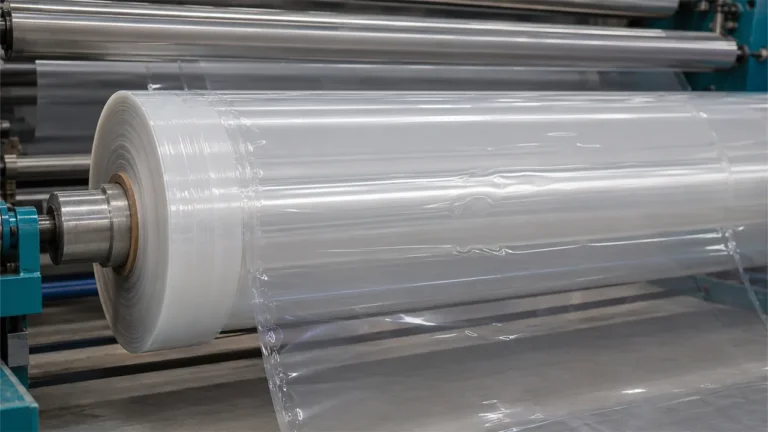
Wrinkles are folds or buckles in the web, telescoping is sideways displacement of wound layers, and a loose roll lacks enough internal stability to retain its intended shape. One roll can show more than one defect, but each symptom needs a different first check.
| Defect | Visible pattern | First check |
|---|---|---|
| Wrinkle | Fold, buckle, or diagonal line in the web | Identify the first roller or nip where it appears |
| Baggy lane | One longitudinal zone remains looser than adjacent film | Check cross-web tension and incoming film shape |
| Telescoping | Layers shift sideways and form a stepped roll end | Review tracking, winding profile, and handling |
| Loose roll | Layers move or the roll loses stability | Check roll build, core support, and post-winding handling |
| Edge wander | Roll edge moves laterally during winding | Check alignment, guide response, and web tension |
Use precise defect terms in photos, inspection reports, and supplier messages. Calling every roll problem a wrinkle makes it harder to decide whether the source is the incoming roll, the buyer’s web path, the winder, or later storage.
What Does the Defect Pattern Reveal About Its Cause?
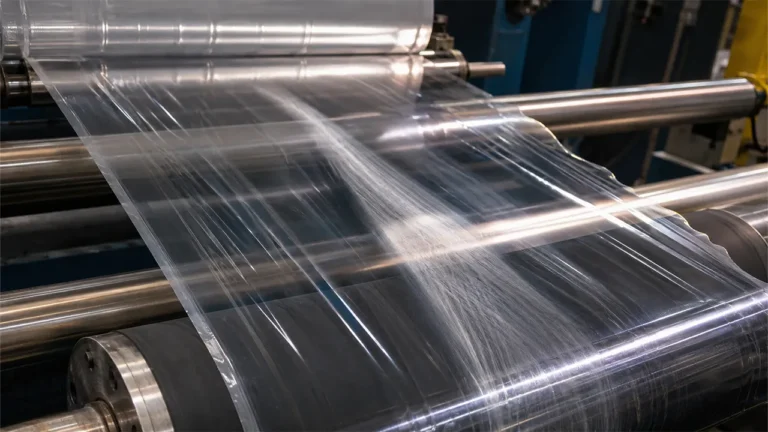
Defect position, direction, and change with roll diameter often reveal the correct investigation path. The final roll shape is useful, but the first point where the film changes is more important.
- A wrinkle visible before the first process roller may already be in the supplied roll.
- A wrinkle that begins at one nip points toward alignment, pressure distribution, roller condition, or tension at that zone.
- A diagonal wrinkle can indicate steering or unequal tension across the web.
- Telescoping that increases as diameter grows may involve the winding profile, guiding, roll stability, or trapped air.
- Loose outer wraps that appear after transport may involve handling or internal stress redistribution rather than the original winding step alone.
Mark the machine direction and cross direction on a sample. Photograph the whole web path and the roll end. Record the roll diameter when the symptom first appears. These details are more actionable than a close-up of the finished defect alone.
If layers also stick together, investigate Internal link pending: PVC Film Sticking and Blocking separately. Blocking and telescoping can interact, but they are not the same defect.
Why Do PVC Film Rolls Develop These Defects?
These defects develop when film behavior, web path, tension, nip pressure, winding torque, alignment, core support, and handling are not balanced. Increasing tension is not a universal solution.
Web Tension, Nip, and Alignment
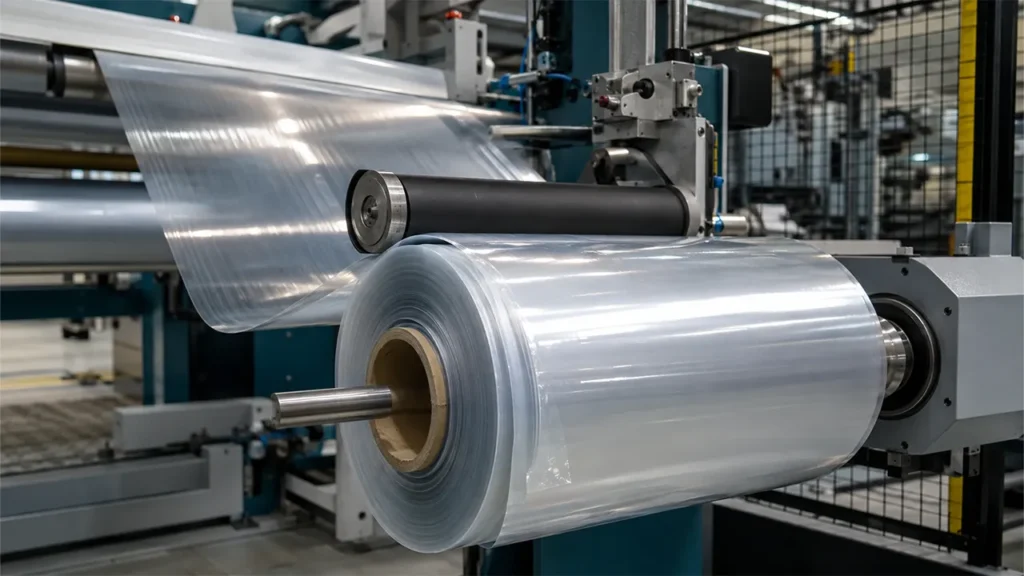
Uneven tension across the width can create baggy lanes or diagonal wrinkles. Too little tension may reduce web control, while too much can stretch flexible PVC film and store stress that appears later. Nonparallel rollers, contaminated roller surfaces, incorrect wrap angles, unstable guiding, and uneven nip pressure can steer or buckle the web.
DFE’s winding guidance identifies tension imbalance, tracking problems, uneven material behavior, and loose winding as contributors to telescoping and unstable rolls. A 3M converter bulletin also connects poor nip-roll geometry with steering, wrinkles, bubbles, and poor contact.
Film, Core, Winding, and Storage Factors
Film thickness variation, uneven stretch, damaged edges, or poor lay-flat may make a stable roll difficult to build. These possibilities require measurement; appearance alone cannot prove a film defect.
Core damage, poor chuck engagement, unsuitable support, excessive roll weight for the handling system, trapped air, and an incorrect winding profile can reduce roll stability. After winding, shock, heat, unsupported storage, or uneven loading may allow layers to move.
| Cause family | Evidence to collect |
|---|---|
| Incoming film or roll | Roll-end photo, edge condition, lay-flat sample, width/thickness map if agreed |
| Web path | Full path video, roller condition, alignment check, guide behavior |
| Winding | Diameter at first defect, tension/torque/nip trend, taper settings |
| Core and mounting | Core condition, chuck engagement, runout, roll weight and diameter |
| Storage and transport | Package condition, support position, stacking, shock, and temperature history |
See Internal link pending: PVC Film Storage and Roll Handling Guide for warehouse and shipment controls.
How to Diagnose Where the Defect Begins
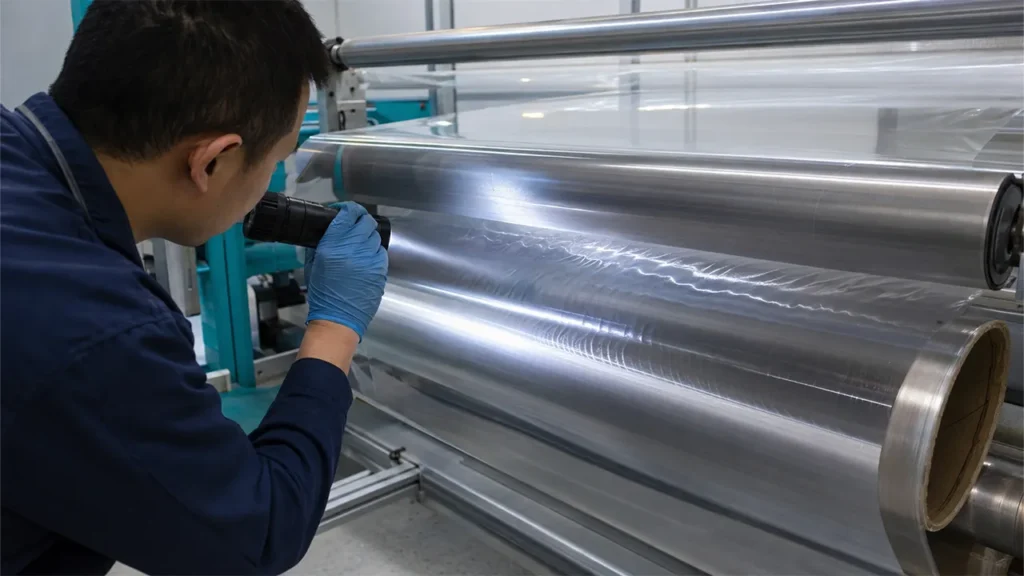
Trace the web from the supplied roll to the winder at controlled low-risk conditions. Do not change several settings before recording the original behavior.
- Inspect the package, core, roll ends, edges, and loose outer wraps.
- Mount the roll according to the equipment procedure and verify core/chuck engagement.
- Observe the film before the first roller. Record whether the defect is already visible.
- Follow the web through every idler, guide, nip, heating zone, and coating or laminating point.
- Mark the first location where a wrinkle, steering change, or loose lane appears.
- Record speed, tension, nip, guide, and winding values shown by the machine.
- Change one variable and document the result before making the next change.
- Compare another labeled roll under the same conditions when available.
A trial is not reliable when the operator changes tension, nip pressure, speed, and guiding at the same time. It may remove the symptom without identifying the cause, making the next roll unpredictable.
What Corrective Actions Should Be Tested First?
Begin with mounting, cleanliness, alignment, and guiding before making major tension or pressure changes. These checks are reversible and less likely to damage flexible film.
| Priority | Action | Stop condition |
|---|---|---|
| 1 | Secure the roll and verify core/chuck condition | Stop if the core slips, collapses, or runs visibly out of line |
| 2 | Clean and inspect rollers and nips | Stop if damage or runout requires maintenance |
| 3 | Verify web path, roller parallelism, and guiding | Stop if the web approaches an unsafe edge or pinch point |
| 4 | Run a controlled low-speed observation | Stop if wrinkles become permanent or edges tear |
| 5 | Adjust one approved winding variable | Stop if stretch, curl, or roll instability increases |
Do not maximize web tension to force the film flat. Flexible film can stretch, and the stored stress may return as curl, loose wraps, or dimensional change. Follow the equipment manual and the product-specific supplier guidance when available.
Rewinding a telescoped roll may be possible if the core, edges, and film remain undamaged. Test a small quantity first. Do not promise that rewinding will recover a roll that is creased, stretched, contaminated, or edge-damaged.
How Can Buyers Prevent Repeat Roll Defects?
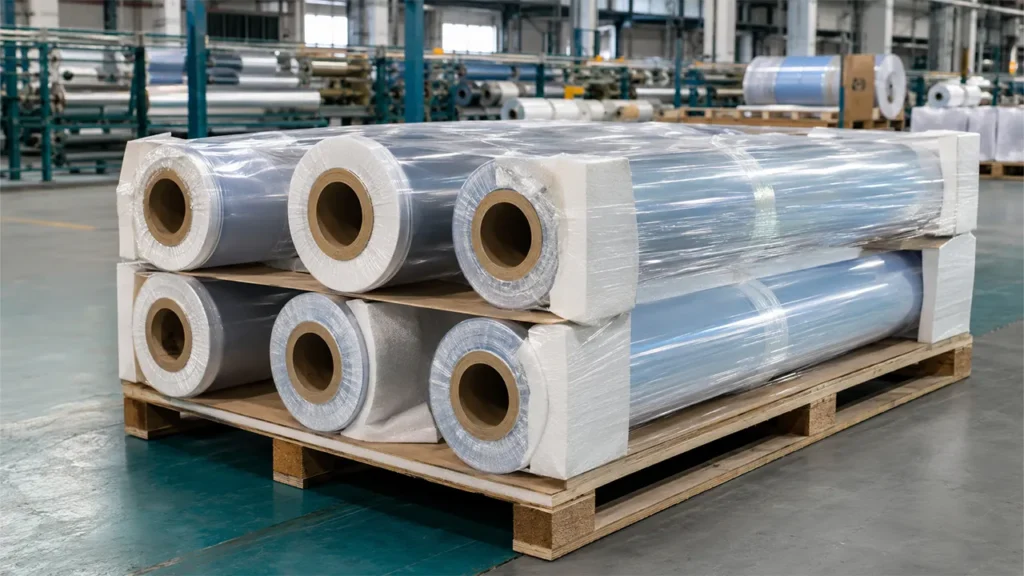
Prevention requires agreed roll construction, packaging, handling, and converting requirements. “Tight roll” is not a complete purchasing specification.
Confirm the application, thickness, width, fixed length or weight, core, maximum roll diameter, winding direction, joint allowance, edge condition, and packaging needs. Also tell the supplier how the roll will be mounted, accelerated, guided, processed, and lifted.
YESIN supplies flexible PVC film and supports custom slitting, rewinding, fixed-length rolls, and fixed-weight rolls. The exact core, tolerance, joints, diameter, weight, packaging, and winding configuration must be confirmed by order. The verified maximum finished width is 1450 mm; no universal minimum width or roll format should be assumed.
For approval:
- Inspect a trial roll on the actual line.
- Define acceptable roll-end, edge, and lay-flat conditions.
- Record the approved roll and process settings.
- Retain labeled material when repeat-order comparison matters.
- Agree how changes to film, core, winding, or packaging will be reviewed.
What Evidence Should Be Sent to the Film Supplier?
Send roll identity, dimensions, a defect map, line conditions, and video of the first appearance. This allows the supplier to separate incoming-roll, processing, winding, and handling factors.
Include:
- Roll, batch, and order number
- Width, roll format, core, and package condition
- Defect type and position
- Roll diameter when the defect starts
- Full web-path video
- Line speed and recorded tension, nip, and guiding values
- Storage and transport history
- Affected and acceptable samples
- The corrective action already tested and its result
Technical inquiry: Share the application, roll/core details, defect map, line video, and recorded settings. YESIN can review the confirmed flexible PVC film request and determine which sample, roll-configuration, or document steps are applicable.
Use Internal link pending: PVC Film Quotation Specification Checklist when preparing a repeat order or revised roll requirement.
Frequently Asked Questions About PVC film wrinkles
What causes a PVC film roll to telescope?
Telescoping can result from lateral layer movement caused by tracking drift, tension imbalance, unstable roll build, trapped air, material stretch, poor support, or later handling. Locate when the movement begins and record the winding and storage history before assigning one cause.
Can increasing web tension remove wrinkles?
Sometimes a controlled tension adjustment changes a wrinkle, but higher tension is not a universal fix. Excessive tension can stretch flexible PVC film and create stored stress. Check mounting, alignment, guiding, nips, and the first point of wrinkle formation before adjusting tension within approved limits.
Why does a roll become loose after winding?
A roll may loosen when its internal stress redistributes, when the original roll build lacks stability, or when handling and storage allow layers to move. Core support, roll diameter, film behavior, winding profile, temperature, and loading should be reviewed together.
How can I tell whether wrinkles came from the supplied roll?
Observe the film before it reaches the first process roller. If the wrinkle or baggy lane is already visible, document it with the roll label and position. If it appears later, trace the web to the first roller, nip, guide, or processing zone where it develops.
Can a telescoped roll be rewound?
Possibly, if the core, edges, and film remain undamaged and a controlled trial produces acceptable lay-flat and roll stability. Rewinding cannot reliably recover permanent creases, stretch, contamination, or edge damage. Follow equipment and material guidance.
What video should I send the PVC film supplier?
Show the roll label, package and core, roll mounting, full web path, machine display, and exact point where the defect first appears. Include the roll diameter, speed, relevant settings, and a view of both roll ends.
References
These references support the industry-general explanations and test context used in this draft.
Need Help With PVC film wrinkles?
Share the application, roll/core details, defect map, line video, and recorded settings. YESIN can review the confirmed flexible PVC film request and determine which sample, roll-configuration, or document steps are applicable.
Get PVC Film Support
Get Quote In 2 Minutes!