Why Does PVC Film Shrink, Curl or Warp After Processing?
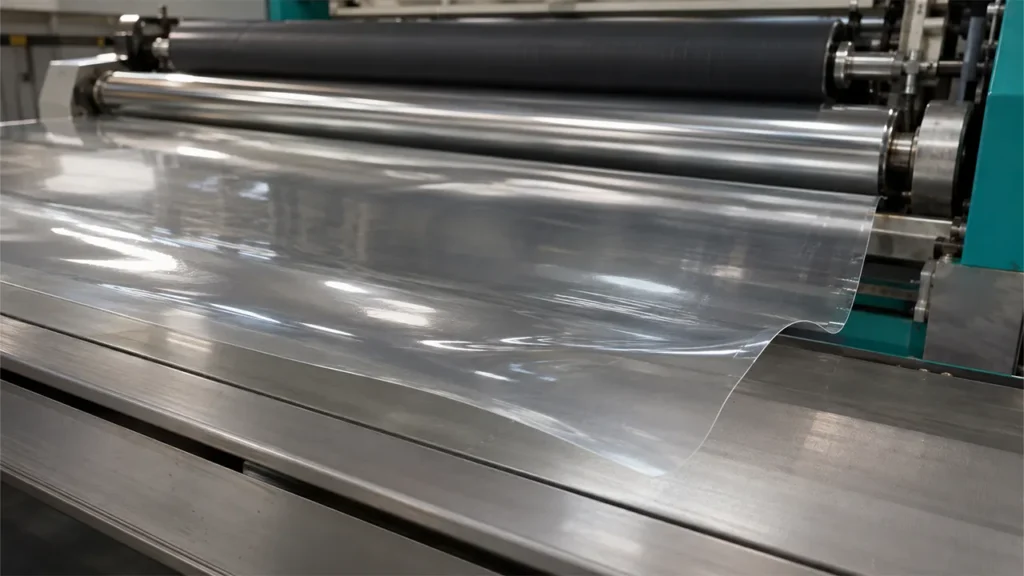
PVC film can shrink, curl, or warp after processing when heat, stored stress, web tension, laminate structure, cooling, or conditioning creates an imbalance. These symptoms are not interchangeable. Shrinkage changes dimensions, curl creates directional curvature, and warpage changes overall flatness. Diagnose the first processing stage where the shape changes before altering the film specification.
What Is the Difference Between Shrinkage, Curl and Warpage?
Shrinkage is a measurable reduction in length or width, curl is mainly directional curvature, and warpage is broader out-of-plane distortion. Correct terminology determines what the buyer should measure.
| Symptom | Practical definition | Useful record |
|---|---|---|
| Shrinkage | Length or width becomes smaller after exposure | Before/after dimensions in machine and cross directions |
| Curl | One edge or direction bends away from flat | Curl direction, radius or lift, and film orientation |
| Warpage | The sheet or converted part develops a complex non-flat shape | Flat-reference photo and height map |
| Local heat distortion | Only the heated or welded zone changes shape | Heat-zone dimensions and process position |
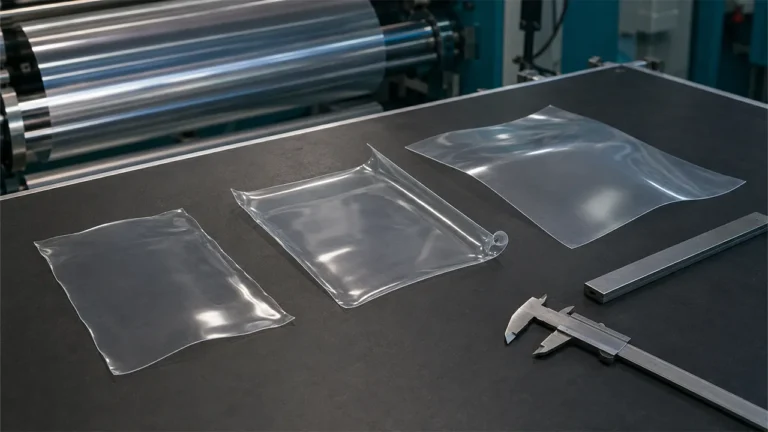
Machine direction (MD) follows the film through production; cross direction (CD) runs across its width. Mark both on every specimen. A result without orientation, exposure, and measurement timing is difficult to reproduce.
Intentional shrink-film behavior is outside this article. Buyers looking for that application should use Internal link pending: PVC Shrink Film Guide rather than apply shrink-film explanations to unintended distortion.
When and Where Does the Distortion Appear?
The first appearance of the defect is often more useful than the final shape. Record whether it begins during heating, cooling, lamination, welding, printing, cutting, forming, or later storage.
- Before processing: inspect roll shape, lay-flat, storage, and conditioning.
- Inside a heat zone: review actual temperature distribution, dwell, speed, and support.
- During cooling: check whether cooling is uniform and whether the web remains under unbalanced tension.
- After lamination: compare the tension and dimensional response of both bonded layers.
- After cutting: determine whether stored stress is released when the part is freed from the web.
- After hours or days: review conditioning, adhesive cure, storage support, and environmental exposure.
Map the defect at the edge, center, seam, printed area, or full sheet. Keep an unprocessed control from the same roll position. If the material already has wrinkles or loose lanes during unwind, investigate Internal link pending: PVC Film Wrinkles, Telescoping and Loose Rolls first.
Why Does PVC Film Distort After Processing?
PVC film distorts when forces within the film or finished structure are no longer balanced. Heat, tension, bonded layers, cooling, storage, and material selection can contribute.
Heat and Residual Stress
Heating can release orientation or stress stored during film production and converting. Uneven heating makes one zone change more than another. Cooling at different rates can then lock in a curved shape.
The applicable process window depends on the exact flexible PVC formulation, thickness, surface, equipment, and final product. A universal temperature or dwell time would be unsafe. ASTM lists D2732 for unrestrained linear thermal shrinkage of film and D1204 for dimensional changes of nonrigid thermoplastic film at elevated temperature. The selected method must match the buyer’s question.
Tension, Lamination, and Structural Imbalance
If one web is stretched more than another during lamination, the finished structure may curl when tension is released. A 3M lamination bulletin identifies excessive unwind tension as one cause of upward curl in finished graphics. Misalignment, unequal layer stiffness, substrate movement, and adhesive cure can also affect the final balance.
Storage, Conditioning, and Material Factors
Large temperature changes between transport and the work area can alter handling and may cause condensation. Film should be conditioned according to product-specific guidance before a controlled comparison.
Thickness, formulation, hardness, surface, and previous heat history influence film behavior, but one property does not predict the full result. Two films with the same nominal thickness may process differently. Do not diagnose plasticizer change or thermal degradation from shape alone.
| Cause family | Evidence to collect |
|---|---|
| Heat | Actual temperature profile, dwell or speed, heated-zone map |
| Tension | Unwind/rewind values, web orientation, layer tension, curl direction |
| Laminate structure | Film, adhesive, substrate, layer order, and cure conditions |
| Cooling and support | Cooling sequence, pressure, flat support, removal time |
| Material and storage | Roll/batch, conditioning, thickness, surface, retained control |
How to Diagnose the Root Cause with Controlled Samples
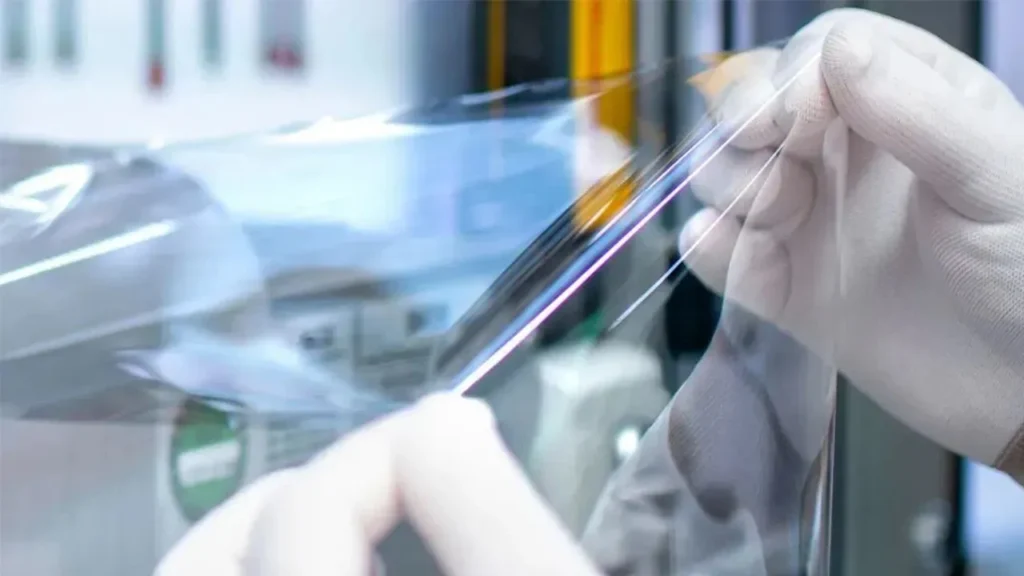
Compare an unprocessed control, a heat-only specimen, and a fully processed specimen. Change one variable at a time and measure both MD and CD.
- Cut specimens from known roll positions and label roll ID, side, MD, and CD.
- Measure the baseline dimensions on a flat reference.
- Condition specimens in the same environment.
- Run one specimen through the heat exposure without lamination or other added variables when safe.
- Run the full process using recorded actual conditions.
- Cool every specimen by the same procedure.
- Measure dimensions and flatness at defined intervals.
- Repeat with one controlled change, such as lower tension or more uniform support.
- Compare another roll or approved reference when available.
| Saple | Purpose | Required record |
|---|---|---|
| Unprocessed control | Shows original dimensions and lay-flat | Position, orientation, conditioning |
| Heat-only sample | Isolates thermal response | Actual temperature, dwell, support, cooling |
| Fully processed sample | Shows combined process result | Complete line and material record |
| Accepted reference | Establishes comparison basis | Approved specification and test history |
Photograph samples on the same grid and from the same angle. A handheld photograph without a flat reference can exaggerate or hide curl.
What Process Changes Should Be Tested First?
Verify uniform heating, actual temperature, balanced tension, alignment, and consistent cooling before requesting a different film formulation.
Start with equipment calibration and web alignment. Confirm that temperature displays reflect the process zone. Check whether the film or laminate remains stretched during cooling. Support the sample consistently, and avoid several simultaneous adjustments.
For lamination, compare unwind tension on both webs and inspect nip geometry. For welding, inspect the seam and adjacent heat-affected area. For printing or coating, determine whether drying temperature, solvent, ink, or coating changes the surface or dimensions.
Stop a trial if the film discolors, thins, bubbles, cracks, or loses required surface properties. Follow the equipment maker and film supplier’s product-specific instructions.
Evaluate the result after the same cooling and waiting period. A sheet that appears flat while held under tension may curl after cutting. A laminate that is flat while warm may distort after both layers reach room conditions. Record the shape immediately, after cooling, and after the agreed conditioning period when delayed movement is part of the complaint.
Use a simple trial sequence:
- Run the accepted reference under the current process to confirm that the line can reproduce a known result.
- Run the affected film without changing settings.
- Correct one verified equipment variable, such as alignment or uneven heating, and repeat.
- Test another labeled roll only after the process check is complete.
- Request a material change when the process is controlled but the film still fails the agreed dimensional criterion.
This sequence helps prevent a new film from masking an unresolved equipment problem. It also prevents repeated machine adjustments when the supplied material does not match the approved reference.
How Can Buyers Specify Dimensional Stability?
“Non-shrink PVC film” is not a complete specification. Buyers should define the process exposure, orientation, measurement method, timing, and result that counts as a pass.
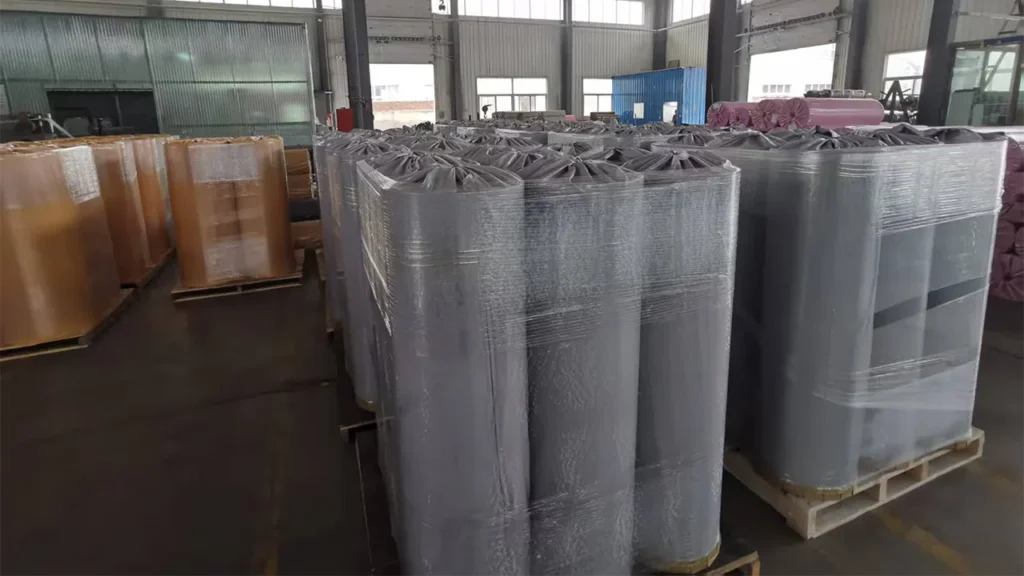
Provide:
- Finished product and geometry
- Printing, lamination, welding, forming, or heating process
- Film side and MD/CD orientation
- Target thickness, width, surface, and flexibility
- Actual maximum exposure and dwell under production conditions
- Cooling and support method
- Test specimen and measurement timing
- Acceptable dimensional change and flatness
- Sample-approval and repeat-order reference
YESIN supplies flexible PVC film only, with a maximum finished width of 1450 mm. Thickness, color, transparency, surface, slitting, and roll format can be customized for a confirmed request. Dimensional performance, test method, tolerance, and final process suitability must be agreed for the exact product and application.
What Information Should Be Sent to the Supplier?
Send marked specimens, process records, and before/after measurements. “The film warped” does not provide enough information to reproduce the condition.
Include roll/batch ID, roll position, MD/CD, film structure, baseline and final dimensions, equipment, actual temperature, speed or dwell, tension, substrate, adhesive, cooling, defect timing, and photos. Send both unprocessed and processed samples when possible.
Technical inquiry: Share the application, dimensions, process exposure, defect timing, and labeled control and processed samples. YESIN can then confirm the applicable flexible PVC film, sample, TDS, or test scope for the request.
Use Internal link pending: PVC Film Quotation Specification Checklist to prepare the complete order information.
Frequently Asked Questions About PVC film shrinkage
Why does PVC film shrink when heated?
Heating can release orientation or residual stress and cause dimensional change. The result depends on formulation, thickness, direction, exposure, support, and cooling. Measure MD and CD under a defined method rather than assuming all flexible PVC film has the same shrinkage.
Is PVC film curl always caused by excessive tension?
No. Tension is one possible cause, but uneven heat, cooling, laminate structure, substrate movement, storage, and material behavior can also create curl. Record when and where the curvature begins and compare controlled samples.
How should PVC film shrinkage be measured?
Mark specimen orientation and dimensions, apply a defined exposure, cool the sample consistently, and measure after an agreed interval. Use the current method that matches the film and application. Do not compare results obtained with different specimens or conditions.
Can curled PVC film flatten after conditioning?
Some curvature may change after controlled conditioning, but recovery depends on whether the distortion is reversible or permanent. Test a labeled sample and confirm surface and dimensional requirements before using the full roll.
Why does laminated PVC curl after cooling?
The bonded layers may contain unequal tension or respond differently to heat, cooling, and cure. Identify curl direction, review both web tensions, inspect layer structure, and compare a heat-only film sample with the complete laminate.
What process data should be sent to the supplier?
Send actual temperature, speed or dwell, tension, orientation, substrate, adhesive, cooling sequence, timing, and before/after measurements. Include labeled control and processed samples from known roll positions.
References
These references support the industry-general explanations and test context used in this draft.
Need Help With PVC film shrinkage?
Share the application, dimensions, process exposure, defect timing, and labeled control and processed samples. YESIN can then confirm the applicable flexible PVC film, sample, TDS, or test scope for the request.
Get PVC Film Support
Get Quote In 2 Minutes!