PVC Film Color Difference, Haze and Gloss Inconsistency: How to Diagnose the Problem

PVC film color difference, haze, and gloss inconsistency are related appearance issues, but they are not the same measurement. A sample can look lighter because its gloss or texture changed even when its color is similar. Transparent-film cloudiness requires a haze method. Verify the inspection system first, then map variation within the roll and process.
Are Color Difference, Haze and Gloss the Same Problem?

Color describes chromatic appearance, gloss describes specular reflection, and haze describes light scattering. A complete appearance requirement may need more than one value and an approved physical sample.
| Attribute | What the buyer sees | Main control question |
|---|---|---|
| Color | Shade, lightness, or saturation difference | Were sample and master measured under the same color conditions? |
| Gloss | More or less shiny surface | Was the same gloss method and angle used? |
| Transmission haze | Transparent film looks cloudy | Was the correct transparent-plastics method used? |
| Reflection haze | Reflected image looks milky around highlights | Is the complaint about the surface rather than transmitted clarity? |
| Texture | Surface scatters light differently | Are samples from the same embossed or smooth construction? |
ASTM D2457 covers specular gloss of plastic films and states that precise comparisons are meaningful only when the same procedure and comparable material type are used. It also warns against directly comparing transparent and opaque film gloss values.
Haze is not simply “low gloss.” ASTM D1003 addresses haze and luminous transmittance of transparent plastics. Use the method that matches the film form and the buyer’s visual question.
Could the Inspection or Measurement Method Be Causing the Difference?
Appearance results are comparable only when sample preparation, instrument configuration, viewing conditions, and reference standards are controlled.
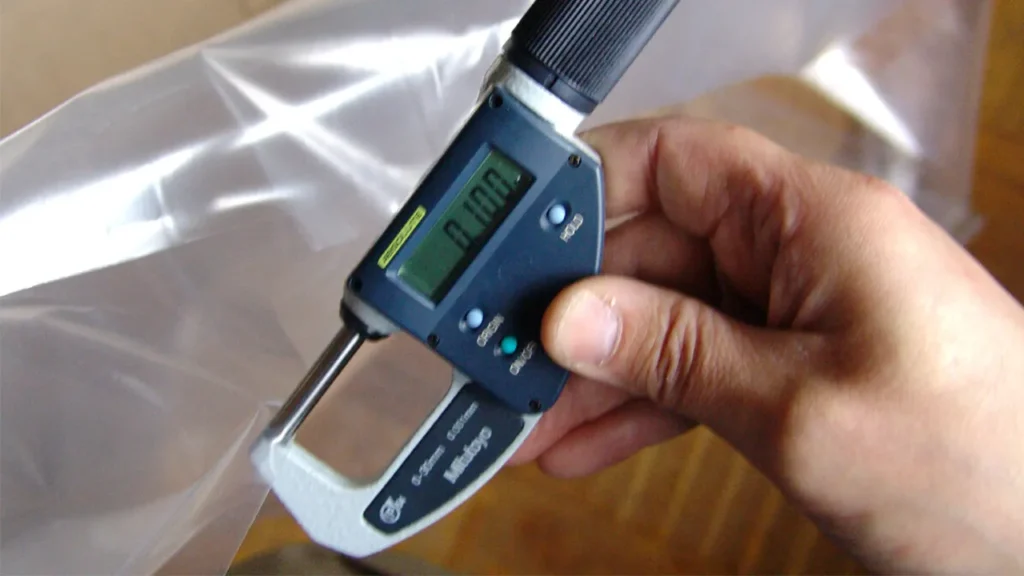
Check:
- Instrument calibration and repeatability
- Measurement geometry and gloss angle
- Illuminant and observer for color data
- Whether specular reflection is included or excluded
- Film side and machine/cross orientation
- Thickness, number of layers, and sample backing
- Surface cleanliness, scratches, and fingerprints
- Conditioning temperature and time
- Transparent versus opaque measurement mode
- Visual comparison under a defined light source
A measurement system can either reveal a real process change or create an apparent difference. HunterLab’s color-variation guidance recommends confirming that the measurement variation is smaller than the product variation before investigating materials.
Repeat several readings from the same sample, then reposition it and measure again. If the result changes with orientation, backing, or location, document that behavior rather than averaging it away.
What Does the Variation Pattern Reveal?
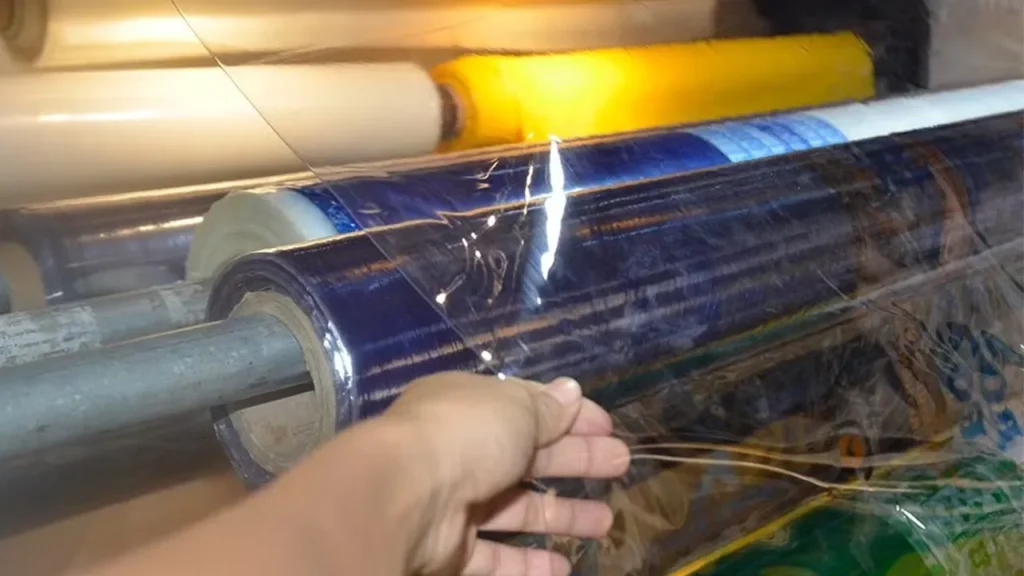
A fixed edge band, gradual drift, repeating mark, isolated spot, and uniform roll-to-roll shift require different investigations.
| Pattern | First measurement check | Process or material review |
|---|---|---|
| Edge differs from center | Same backing, thickness, and orientation | Edge cooling, surface, thickness, contamination |
| Gradual change along roll | Instrument drift and sampling interval | Mixing, heat history, process drift |
| Repeating bands | Repeat distance and instrument spot | Roller, coating, embossing, or contact event |
| Isolated cloudy spots | Cleanliness and local thickness | Contamination, bubbles, surface damage |
| Difference only after lamination | Measure film and laminate separately | Adhesive, substrate, backing, heat, pressure |
| Roll-to-roll shift | Same master and conditions | Batch, color reference, finish, thickness |
Label samples by roll position, side, and direction. Compare outer, middle, and core-side material when relevant. Preserve both the raw readings and the physical pieces.
If thickness variation is suspected, use Internal link pending: PVC Film Thickness Variation Guide rather than treating every optical difference as a colorant problem.
Why Do PVC Film Appearance Properties Change?
Appearance can change through material or pigment variation, dispersion and heat history, thickness or surface differences, contamination, abrasion, aging, printing, or lamination. The visible result does not identify the cause by itself.
Material and Production Factors
Colorants, fillers, raw-material lots, dispersion, mixing, and thermal history are supplier-investigation categories. Thickness and cooling can change how transparent film transmits and scatters light. Surface finish and embossing strongly affect reflected appearance.
YESIN supplies clear, tinted transparent, opaque colored, and custom-colored flexible PVC films. Pantone and physical-sample color matching are verified capabilities. Production approval must still define thickness, transparency or opacity, gloss, surface, measurement conditions, tolerance, and the approved master.
Surface, Handling, and Converting Factors
Fingerprints, dust, scratches, roller marks, packaging pressure, and abrasion can change gloss or haze. Printing, coating, lamination, adhesive, substrate backing, and heat can change the finished appearance even when the base film is unchanged.
UV or weathering exposure belongs to a durability investigation. YESIN can support UV-resistant or UV-stabilized formulations according to project requirements, but no service life or test duration may be claimed without an exact formulation, method, duration, acceptance criterion, and report.
How to Diagnose the Root Cause Step by Step
Verify measurement, reproduce the difference, map it within the roll, compare the approved reference, and isolate post-processing effects before assigning a material cause.
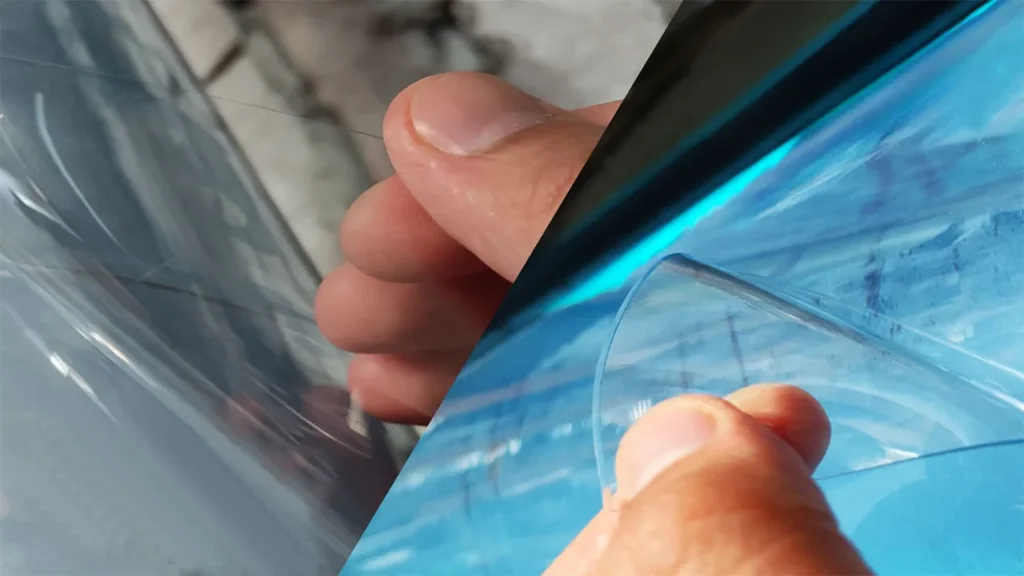
- Define whether the complaint is color, gloss, transmission haze, reflection haze, or texture.
- Clean and condition master and sample consistently.
- Verify calibration and repeatability.
- Record instrument, geometry, angle, illuminant, observer, backing, and orientation.
- Measure several labeled roll positions.
- Check thickness and surface where appearance differs.
- Compare unprocessed film with printed, coated, heated, or laminated material.
- Review the approved master, specification, and batch/process records.
- Use another qualified instrument or laboratory if measurement uncertainty remains.
Do not diagnose pigment error, contamination, migration, or thermal degradation from a phone photograph. Photographs are useful for locating the defect, but lighting and camera processing make them poor acceptance instruments.
How Should Buyers Define and Approve Appearance Requirements?
Buyers should approve a physical master together with the measurement method, sample preparation, tolerance, visual conditions, and sampling plan.
Provide the final application, film construction, thickness, color reference, transparency or opacity, gloss, texture, film side, backing, and viewing environment. State the instrument geometry, illuminant/observer, gloss angle, haze method, sample layers, and result that counts as a pass.
Build the approval sheet before the supplier prepares the final sample. This prevents a physical master, instrument reading, and visual comment from becoming three conflicting standards.
| Approval field | What the buyer should define | Why it matters |
|---|---|---|
| Physical master | Identity, validity, protected storage, and approved side | Establishes the visual reference |
| Sample construction | Thickness, layers, backing, orientation, and surface | Prevents a different specimen from changing the result |
| Color method | Instrument geometry, illuminant, observer, and color-difference formula | Makes readings comparable |
| Gloss method | Applicable method and measurement angle | Separates surface shine from color |
| Haze method | Transmission or reflection measurement and specimen setup | Prevents different optical properties from being mixed |
| Tolerance | Agreed pass result and sampling frequency | Supports release and repeat-order decisions |
| Visual review | Light source, viewing angle, background, and distance | Controls the final human assessment |
The production sampling plan should state whether acceptance applies to the roll average, every measured position, or a defined combination. Averages can hide a local edge band or repeating defect. Record both the summary and the individual values when local consistency matters.
For color matching, YESIN can work from a Pantone code, physical sample, or mutually approved reference. A trial sample is prepared for the target film conditions, customer approval is obtained before bulk production, and repeat production can be compared with an approved retained master and specification when available. Zero variation or digital-screen matching should not be promised.
What Evidence Should Be Sent to the Supplier?
Send labeled affected and accepted samples, roll position, raw measurement data, configuration, lighting conditions, and processing history.
Include roll/batch, sample side and orientation, backing, instrument/model, calibration status, geometry, angle, illuminant, observer, raw values, master identity, thickness, surface, converting history, and photographs under controlled light.
Technical inquiry: Share the color or physical master, appearance target, film conditions, method, and labeled samples. YESIN can confirm the flexible PVC film color-matching, sample, optical-test, TDS, or inspection scope for the exact request.
Use Internal link pending: PVC Film Quotation Specification Checklist for a new color or finish approval.
Frequently Asked Questions About PVC film color difference
Can two PVC films have similar color data but look different?
Yes. Differences in gloss, texture, haze, thickness, backing, orientation, and lighting can change visual appearance. Record color and geometric appearance under controlled conditions rather than relying on one number.
Is haze the same as low gloss?
No. Gloss concerns specular reflection from a surface, while transmission haze concerns light scattered through transparent material. Reflection haze is another surface appearance effect. Use the correct method and terminology.
How should transparent PVC film haze be measured?
Use a current method applicable to transparent plastics, with controlled specimen thickness, layers, conditioning, and instrument configuration. Do not compare a haze result with an undefined visual “clarity” grade.
Why does the same PVC film color look different under another light?
Materials can reflect light differently under different illuminants. Define the viewing light, observer, instrument, and physical master for approval. A screen image is not a reliable production standard.
Should buyers approve color with a sample or a number?
Use both when possible. The physical master defines the intended appearance, while the documented method and tolerance make production comparison repeatable. Gloss, texture, and transparency should be included where they affect perception.
What should be included in an appearance complaint?
Include roll position, side, orientation, thickness, raw readings, instrument configuration, master, backing, lighting, and labeled physical samples. State whether the difference appeared before or after converting.
References
These references support the industry-general explanations and test context used in this draft.
Need Help With PVC film color difference?
Share the color or physical master, appearance target, film conditions, method, and labeled samples. YESIN can confirm the flexible PVC film color-matching, sample, optical-test, TDS, or inspection scope for the exact request.
Get PVC Film Support
Get Quote In 2 Minutes!