
PVC Tape Backing Film for Electrical & Adhesive Tape Manufacturing
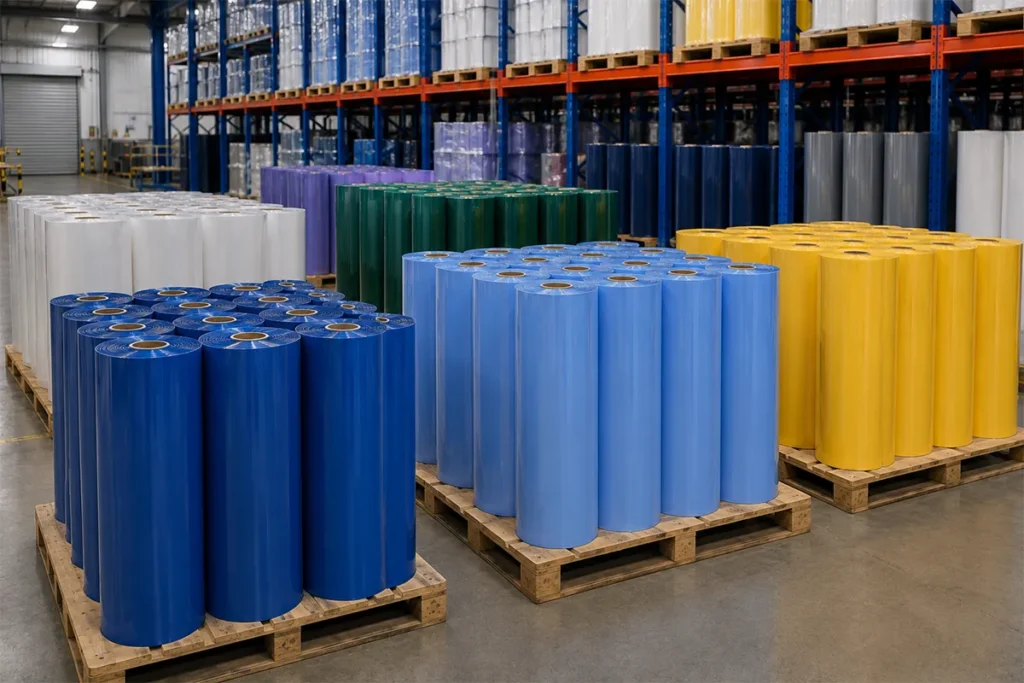
Calendered flexible PVC film supplied in uncoated jumbo rolls for adhesive coating, oven drying, rewinding and slitting. Film formulation and roll specifications can be matched to your tape converting process.
Plasticized Flexible PVC
Calendered

PVC Backing Film Developed Around Your Tape Converting Process
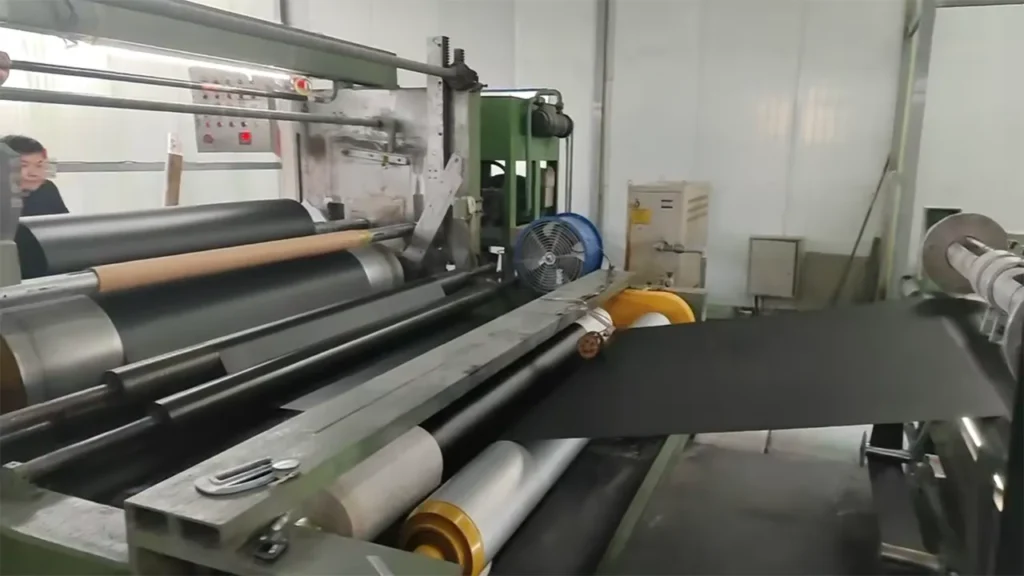
PVC tape backing film is not simply a soft PVC roll. For a tape converter, the film must remain stable while it is unwound, tensioned, coated with primer or pressure-sensitive adhesive, passed through heated drying zones, rewound and slit into finished tape.
This means film selection should consider thickness consistency, tensile and elongation behavior, thermal dimensional stability, plasticizer level, adhesive compatibility, roll flatness and winding quality together.
- Flexible calendered PVC substrate for pressure-sensitive tape production.
- Uncoated jumbo rolls for tape coating and converting plants.
- Custom thickness, width, color, PHR and roll configuration.
- Optional flame-retardant formulation according to confirmed requirements.
- Sample development based on current TDS or physical reference film.
Your Tape Line Needs More Than a PVC Film
A film may look acceptable as a roll but still create problems after coating begins. These are the issues tape converters should evaluate before approving a backing film.
Thickness Changes Across the Roll?
Flexible PVC film for air duct and ventilation applications, featuring excellent weldability, durability and optional flame retardancy.
YESIN Focus:
Thickness profile and agreed tolerance should be confirmed before repeat production.
Film Shrinks During Oven Drying?
Excessive dimensional change under heat may contribute to wrinkles, width change and unstable rewinding.
YESIN Focus:
Evaluate the backing film against the converter’s actual drying temperature and line conditions.
Adhesion Changes After Storage?
Plasticizer level and adhesive chemistry can influence the long-term behavior of flexible PVC tape constructions.
YESIN Focus:
Confirm PHR, plasticizer requirement, primer and PSA system before finalizing the film formulation.
Wrinkles or Tracking Problems?
Loose winding, edge instability, telescoping or poor lay-flat can disrupt continuous coating and slitting.
YESIN Focus:
Core, roll diameter, winding configuration, edges and downstream handling should be specified together.
Designed Around the PVC Tape Converting Workflow
Each converting stage places different demands on the backing film. Tell us how your line runs before approving the production specification.
Unwinding
Web tension and roll stability
Primer
Surface and primer compatibility
PSA Coating
Adhesive-system compatibility
Oven Drying
Thermal dimensional stability
Rewinding
Flatness and roll build
Slitting
Stable edges and finished conversion
Tell Us Your Actual Line Conditions
Oven temperature, line speed, web tension, adhesive type and finished tape requirements are more useful than asking for “standard PVC tape film” alone.
Five Properties That Matter on Your Coating Line
These properties should be evaluated together when selecting flexible PVC film for tape manufacturing.
Thickness
A more consistent substrate supports stable coating, tension control and repeat production.
Thermal
Dimensional stability should be considered under the actual drying conditions used on the coating line.
Tensile & Elongation
The film needs enough flexibility without uncontrolled stretching during converting.
Adhesive Compatibility
Plasticizer, primer and PSA chemistry should be reviewed as one tape construction.
Winding Stability
Flat, stable rolls support smooth unwinding, coating, rewinding and slitting.
Typical Technical Data — PVC Electrical Tape Backing Film
The data below provides a practical development reference for flexible calendered PVC film used as backing material for electrical and industrial adhesive tape. Final production specifications are confirmed after sample approval and should be matched to the customer’s adhesive, coating line and finished-tape requirements.
Reference Grade
YS-ETF110
Material
Plasticized PVC
Process
Calendered
Nominal Thickness
0.11 mm
| Property | Typical Development Target | Unit | Suggested Test Method | Why Tape Converters Care |
|---|---|---|---|---|
| Material | Plasticized Flexible PVC | — | Material Specification | Provides flexibility and conformability for electrical and wrapping tape construction. |
| Manufacturing Process | Calendered | — | Production Record | Supports controlled film gauge and jumbo-roll production. |
| Typical Film Thickness Options | 0.08 / 0.10 / 0.11 / 0.115 / 0.13 / 0.15 | mm | ASTM D374 or agreed method | Influences flexibility, strength, finished tape thickness and coating construction. |
| Reference Grade Thickness | 0.110 | mm | ASTM D374 or agreed method | Practical development starting point for flexible electrical tape backing. |
| Thickness Tolerance | Target ±5%* | % | Cross-web and roll-length profile | Helps reduce variation in tension, coating and finished tape thickness. |
| Finished Width | Up to 1600 | mm | Dimensional inspection | Jumbo-roll width should match coating and slitting equipment. |
| MD Tensile Strength | 20–30* | MPa | ASTM D882 or agreed method | Supports web strength while maintaining flexibility during coating and wrapping. |
| MD Elongation at Break | 200–300* | % | ASTM D882 or agreed method | Supports conformability and controlled stretching. |
| CD Tensile / Elongation | According to approved specification | MPa / % | ASTM D882 | Cross-direction behavior affects web stability, winding and slitting. |
| Thermal Shrinkage — MD | Development target ≤5%* | % | ASTM D1204 or customer oven simulation | Excessive MD shrinkage may cause wrinkles, web instability and dimensional change. |
| Thermal Shrinkage — CD | Development target ≤2%* | % | ASTM D1204 or customer oven simulation | Helps control width change through heated drying zones. |
| Dielectric Strength | Electrical-grade target ≥40* | kV/mm | ASTM D149 / IEC 60243-1 | Relevant when the backing film is developed for electrical insulation tape. |
| Plasticizer Level | Custom formulation | PHR | Formulation control | Influences softness, elongation, thermal behavior and interaction with the adhesive system. |
| Typical Development Window | Approx. 40–65* | PHR | Customer formulation requirement | Final level depends on plasticizer chemistry, filler, flame-retardant system and flexibility target. |
| Surface Appearance | Matte / Glossy / Custom | — | Visual inspection | Surface should be matched to primer, adhesive and finished tape requirements. |
| Film Defects | No visible pinholes, bubbles, severe wrinkles or foreign matter | — | Visual / transmitted-light inspection | Film defects may create coating discontinuity, weak points or slitting problems. |
| Color | Black / White / Red / Blue / Yellow / Green / Custom | — | Approved sample / color measurement | Important for electrical identification, harness and marking tape. |
| Flame-Retardant Grade | Optional | — | According to agreed requirement | Film formulation can be developed for flame-retardant tape constructions. |
| Core | Custom | mm / inch | Dimensional inspection | Must match customer unwinding shaft and handling equipment. |
| Roll Length / Weight | Custom | m / kg | Production record | Longer stable rolls can reduce coating-line changeovers. |
| Documentation | TDS / COA / REACH / RoHS according to confirmed grade | — | Document review | Supports incoming inspection and repeat-order control. |
Start With the Finished Tape Construction
The PVC backing thickness should not be selected from the finished tape thickness alone. Primer and pressure-sensitive adhesive also contribute to the total construction.
| Nominal PVC Film | Typical Development Direction |
|---|---|
| 0.08 mm / 80 μm | Thin flexible tape constructions where low total caliper is required. |
| 0.10 mm / 100 μm | General-purpose thin PVC tape development. |
| 0.11 mm / 110 μm | Practical reference thickness for many flexible electrical tape constructions. |
| 0.115 mm / 115 μm | Common reference direction for approximately 0.13 mm finished electrical tape constructions. |
| 0.13 mm / 130 μm | Heavier backing where additional film body or mechanical strength is required. |
| 0.15 mm / 150 μm | Thicker tape construction for application-specific strength and wrapping requirements. |
Target Finished Tape: About 0.13 mm
PVC Backing
approximately 0.110–0.115 mm
Primer + PSA Layer
determined by coating process
The exact relationship depends on adhesive coat weight, primer, drying conditions and compression during measurement.
Therefore, tell YESIN both your PVC film thickness and finished tape thickness whenever possible.
Match the PVC Backing Film to Your Adhesive System
Plasticizer level influences film flexibility, elongation and processing behavior. For pressure-sensitive tape production, the PVC formulation should also be considered together with the customer’s primer and adhesive system.
Instead of selecting the film from PHR alone, YESIN recommends confirming the complete converting requirement.
Plasticizer Level
Provide required PHR or current reference formulation.
Adhesive System
Rubber-based, acrylic, hot-melt or other PSA system.
Drying Conditions
Provide oven temperature, residence time and line speed.
Finished Tape Target
Flexibility, stretch, insulation, flame and application requirements.
A Small Film Property Can Become a Big Coating-Line Problem
Pressure-sensitive adhesive coating normally includes a heated drying stage. A backing film that changes dimension excessively under heat can wrinkle, narrow or become unstable before rewinding.
Published electrical-tape backing research reported a conventional PVC backing with approximately 3.44% MD shrinkage and 0.84% CD dimensional change, while a comparison material showed approximately 58.48% MD shrinkage.
This demonstrates why thermal dimensional stability should be evaluated according to the customer’s actual coating and drying process.
Conventional PVC Tape Backing
3.44%
MD Shrinkage
0.84%
CD Change
Conventional PVC Tape Backing
58.48% MD
A very high level of MD shrinkage illustrates how unsuitable dimensional behavior can disrupt commercial adhesive-drying processes.
PVC Backing Film for Tape Manufacturers
YESIN supplies the flexible PVC backing material. Adhesive coating and finished-tape conversion are completed by the downstream tape manufacturer.
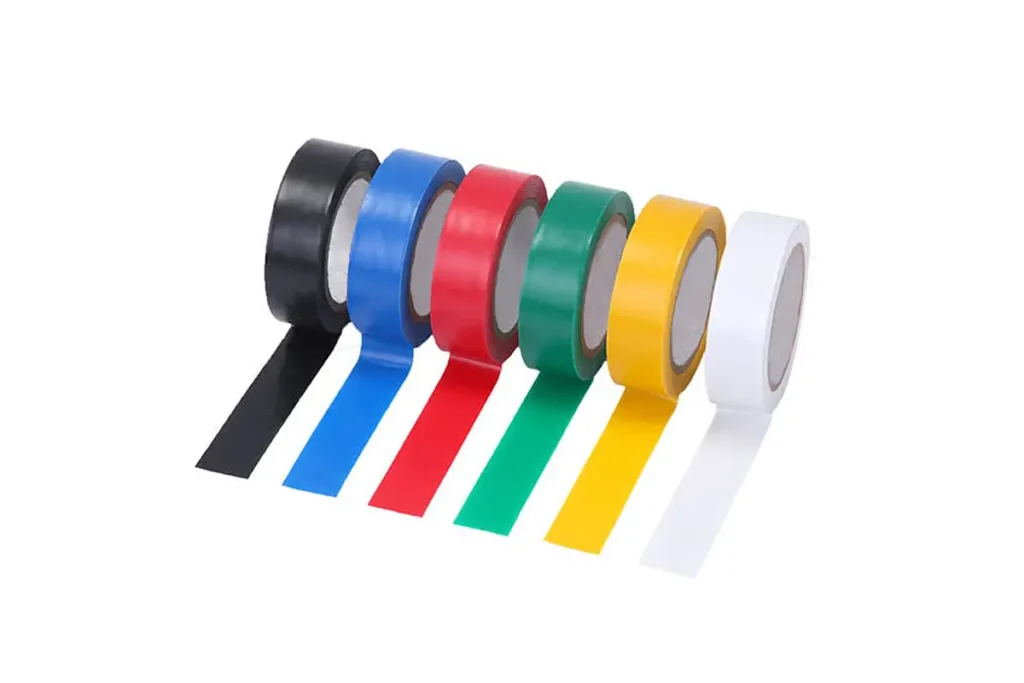
Electrical Insulation Tape
Flexible PVC backing for electrical tape converters requiring controlled thickness, elongation, color and formulation.

Wire Harness Tape
PVC backing film for cable bundling, electrical harness and industrial wire wrapping tape applications.
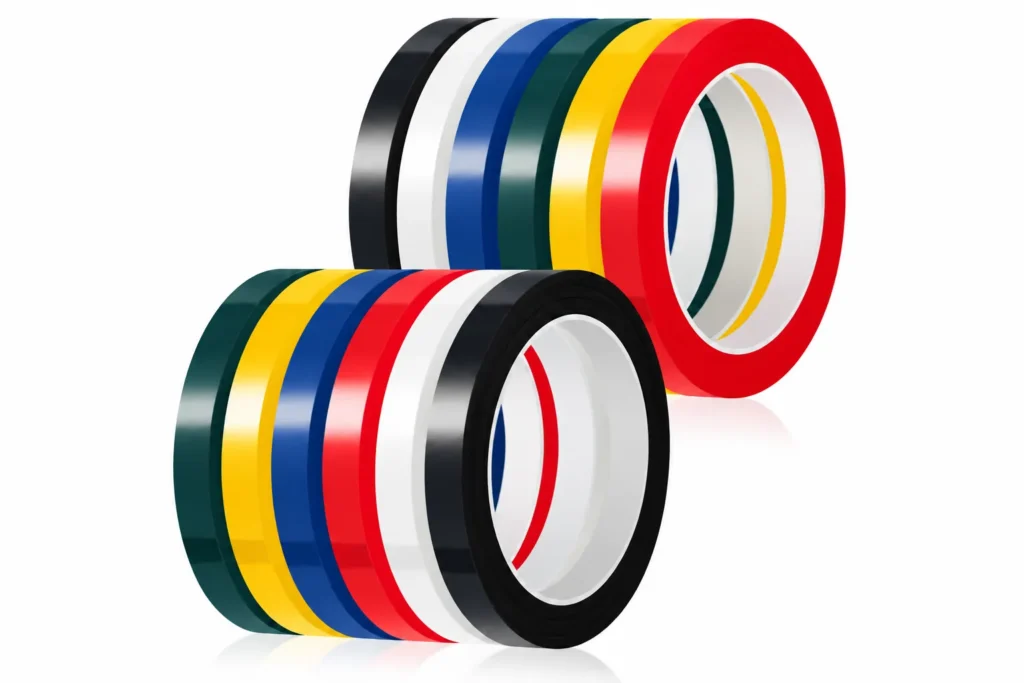
Marking & Identification Tape
Colored PVC backing for identification, safety marking and general industrial tape converting.

Industrial PVC Adhesive Tape
General flexible PVC backing for application-specific industrial pressure-sensitive tape production.
A Tape Film Is Only Useful If It Runs Well
Roll construction should be specified around the downstream coating equipment, not treated as a packaging detail.
Flat Web
Film condition and winding should support stable web handling during continuous converting.
Stable Roll Build
Roll diameter, weight, tension and winding configuration should be confirmed before production.
Clean Roll Edges
Edge condition matters for tracking, guiding and subsequent slitting operations.
Core & Winding Options
Core dimensions and winding direction can be matched to the customer’s unwinding system.
Control the Film Properties That Affect Converting
A repeat order should be compared against an agreed technical specification and approved sample rather than a general description such as “soft PVC film.”
1. Requirement Review
2. Formulation Confirmation
3. Sample Approval
4. Production Control
5. Roll Inspection
6. Packing & Shipment
What Should Be Confirmed Before Mass Production?
Test items and acceptance criteria should be agreed according to the tape construction and customer requirements.
Dimensional Control
- Nominal thickness
- Thickness tolerance
- Width
- Roll length / weight
- Core dimensions
Mechanical Properties
- MD tensile strength
- CD tensile strength
- MD elongation
- CD elongation
- Flexibility / hardness where applicable
Processing Performance
- Thermal dimensional stability
- Surface condition
- Roll flatness
- Winding quality
- Coating trial performance
Recommended Approval Method
Run a trial roll on the actual coating line, record the approved process settings and retain an identified reference sample for repeat-order comparison.
How to Specify PVC Tape Backing Film
Providing these six groups of information helps reduce trial-and-error during sample development.
Define the Tape Application
Electrical insulation, wire harness, marking or another industrial PVC adhesive tape.
Confirm Film Dimensions
Thickness, tolerance, width, roll length or weight, core and maximum roll diameter.
Define the Formulation
Required PHR, color, flexibility, flame-retardant requirement and other functions.
Tell Us the Adhesive
Rubber-based, acrylic, hot-melt or other PSA, including primer where applicable.
Provide Line Conditions
Oven temperature, line speed, tension and any current wrinkles, shrinkage or tracking problem.
Define Finished-Tape Targets
Mechanical, electrical, flame, aging or market-specific requirements should be identified before formulation approval.
Already Using PVC Tape Film? Send Us Your Current TDS or Sample
For an existing tape production line, the fastest starting point is often the material you already use.
Provide the current film TDS, specification sheet or a physical reference sample. YESIN can review the confirmed properties and determine the appropriate sample-development approach.
- Current film TDS
- Physical sample
- Current PHR or formulation requirement
- Current film problem
- Required improvement target
PVC Film Supply Built Around Downstream Manufacturing
YESIN focuses on flexible calendered PVC film and works from the customer’s application and converting process toward an agreed production specification.
Calendered PVC Focus
Flexible PVC film manufacturing rather than rigid-sheet or unrelated plastic-film supply.
Custom Formulation
Thickness, PHR, color and applicable functional properties can be developed around the confirmed requirement.
Roll Customization
Width, length, weight, core, slitting and winding requirements can be discussed around converting equipment.
Sample-to-Order Control
Confirm the sample and technical specification before establishing repeat-order requirements.
What to Confirm Before Ordering PVC Calendered Film
Standards for electrical tape normally evaluate the complete finished tape construction rather than the PVC backing film alone.
Final performance can depend on the backing film, adhesive, coating process, conditioning and finished-product testing. Certification or compliance of a finished tape should therefore not be inferred from the backing film by itself.
Tell YESIN the standard, test item and acceptance target that your finished tape must meet. The PVC backing requirement can then be reviewed as part of that construction.
Information to Provide
- Target market
- Finished tape standard
- Required test method
- Minimum / maximum acceptance value
- Film thickness and construction
- Adhesive system
- Existing test report where available
Compliance documentation and test scope should be confirmed against the exact product formulation and order requirement.
What Information Helps Us Match the Right Tape Film?
A detailed technical inquiry helps reduce repeated sample adjustments and allows the film specification to be matched more closely to the customer’s actual coating process.
Tape Application
Electrical / Harness / Marking / Other
Film Thickness
Film Thickness
Film Width
Jumbo roll or slit width
Roll Specification
Length / weight / core / diameter
Color
Pantone / sample / custom
PHR
Required value or current reference
Adhesive Type
Rubber / Acrylic / Hot Melt / Other
Oven Temperature
Actual production condition
Line Speed
Normal coating speed
Flame Requirement
Yes / No + target method
Current Problem
Shrinkage / wrinkles / thickness / adhesion
Reference Material
TDS / physical sample / test report
PVC Tape Backing Film FAQ
Technical questions from tape manufacturers comparing PVC backing-film suppliers and specifications.
Is this a finished PVC adhesive tape?
No. YESIN supplies uncoated flexible PVC backing film in roll form for downstream tape manufacturers. Primer, pressure-sensitive adhesive coating, drying, rewinding and slitting are completed during the customer’s tape converting process.
What types of tape can this PVC film be used for?
The film can be developed for electrical insulation tape, wire harness tape, marking and identification tape and other flexible PVC pressure-sensitive tape constructions. The final grade should be matched to the actual tape design and process.
Can the PHR of the PVC backing film be customized?
The formulation can be adjusted according to the confirmed plasticizer requirement, flexibility, mechanical properties and downstream processing needs. Provide the required PHR or current film reference when requesting a sample.
Can YESIN match our current PVC tape backing film?
Customers can provide the current film TDS, specification sheet or physical sample. YESIN can review the confirmed parameters and determine an appropriate sample-development and comparison plan.
Why does thermal shrinkage matter during tape production?
After primer or adhesive coating, the PVC web may pass through heated drying zones. Excessive dimensional change can affect web flatness, width, tracking and rewinding. Actual oven conditions should therefore be considered when evaluating the backing film.
Can tensile strength and elongation be customized?
Mechanical-property targets can be discussed according to the customer’s current specification, tape application and test method. MD and CD requirements should be stated separately where important.
Is the PVC film suitable for rubber-based or acrylic adhesive?
Adhesive compatibility depends on the complete formulation and converting process. Tell YESIN whether you use rubber-based, acrylic, hot-melt or another PSA system and whether a primer is used. A coating trial is recommended before mass production.
Can flame-retardant PVC tape backing film be supplied?
Flame-retardant formulations can be discussed according to the customer’s finished-tape requirement and specified test method. Final finished-tape compliance depends on the complete tape construction and should be verified on the finished product.
What technical documents can be provided?
Applicable TDS, COA, specification, inspection data, REACH and RoHS documentation should be confirmed for the exact product formulation and order.
What information is required for a quotation?
Please provide tape application, film thickness, tolerance, width, roll length or weight, core, color, PHR, adhesive system, oven conditions, functional requirements, quantity and destination. A current TDS or physical sample is helpful for replacement projects.
Request a Trial Roll Before Mass Production
Send your current PVC film TDS, thickness, width, PHR, adhesive type, oven temperature and tape application. YESIN will review the requirement and prepare the appropriate next step for sample or quotation confirmation.
Get a PVC Film Quote
Get Quote In 2 Minutes!