
PVC Car Cover Film Roll for Car Cover Manufacturing
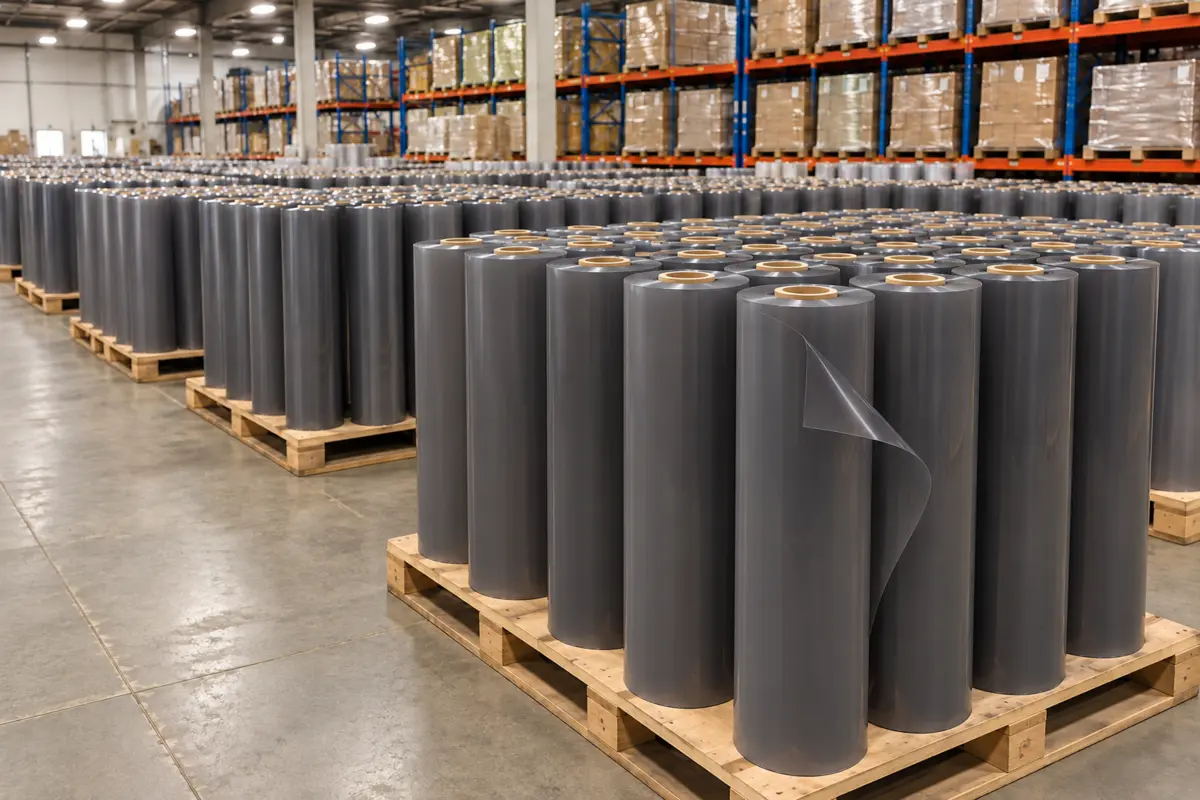
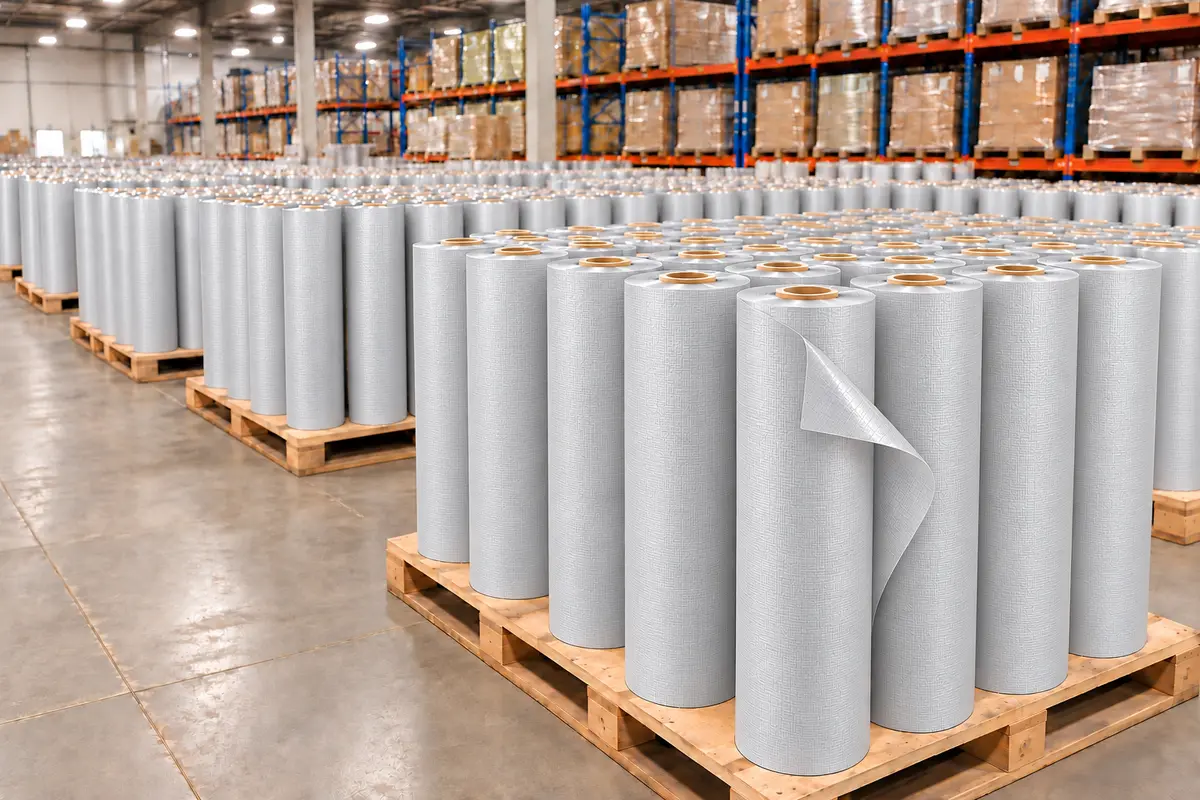
Flexible calendered PVC film supplied in jumbo rolls for manufacturers converting waterproof car covers, motorcycle covers and vehicle protective covers. Thickness, softness, color, UV stabilization, low-migration formulation and roll dimensions can be developed around your finished cover.
Plasticized Flexible PVC
Calendered
Flexible PVC Film Developed for Car Cover Converters
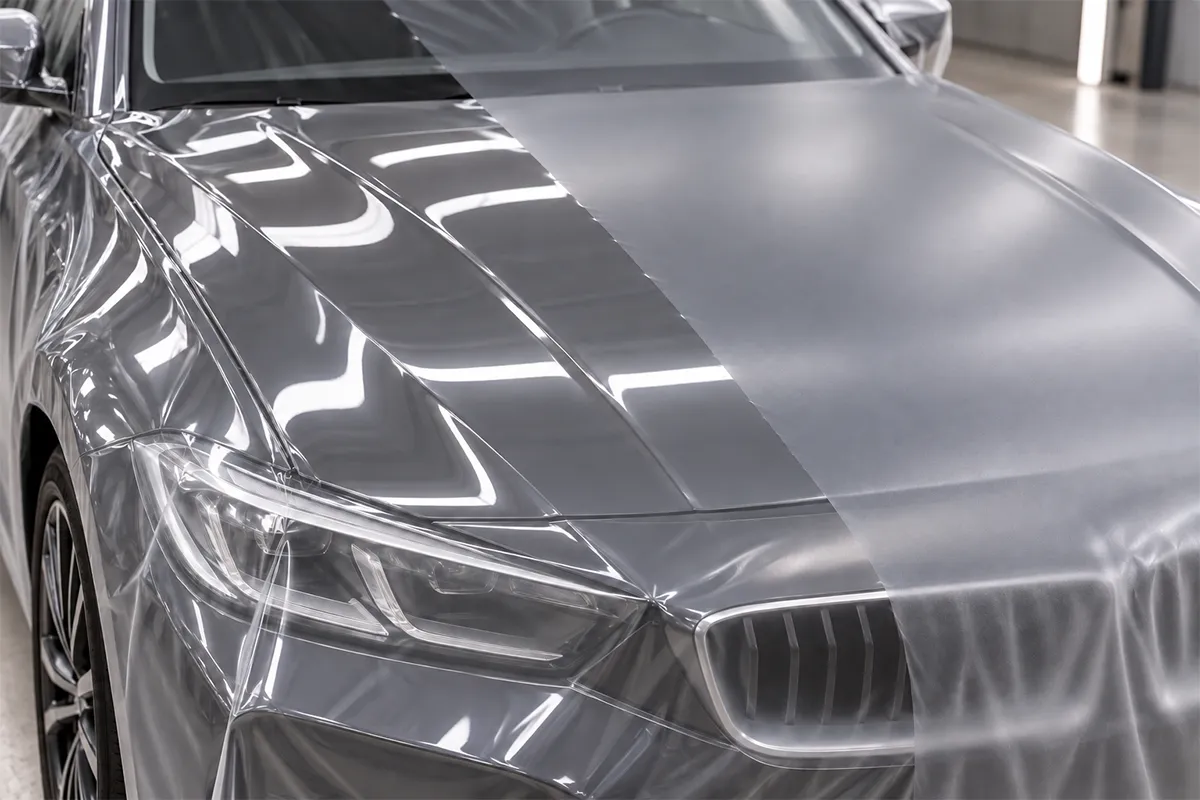
A car-cover PVC film must do more than block water. During use, the material can be folded repeatedly, stretched around mirrors and body contours, exposed to sunlight and heat, and remain in direct contact with painted vehicle surfaces.
For car-cover manufacturing, the important film properties therefore include flexibility, tensile and elongation balance, tear resistance, heat stability, plasticizer migration, UV aging behavior, surface finish, weldability and roll consistency.
- Flexible calendered PVC film supplied in roll form.
- Suitable for cutting, welding and car-cover converting trials.
- Custom thickness, width, softness, color and surface.
- Optional UV-stabilized formulation for higher sun exposure.
- Low-migration formulation development for paint-contact applications.
- Metallic silver, grey, opaque and custom color development.
The Real Problems Start After the Cover Touches the Car
Waterproof performance is only the starting point. Heat, UV exposure, wind movement, repeated folding and direct contact with automotive paint can expose weaknesses that are not visible when inspecting a new PVC roll.
Oil Transfer or Paint Staining?
Heat can accelerate plasticizer migration from flexible PVC. A poor formulation may become tacky, oily or interact with surfaces in direct contact with the cover.
YESIN Focus:
Match the plasticizer system and evaluate hot-contact staining before approving long-term paint-contact use.
Film Becomes Brittle in Sunlight?
UV and heat aging can lead to fading, hardening, cracking and loss of flexibility.
YESIN Focus:
Specify the actual exposure conditions and develop an appropriate UV-stabilized formulation where required.
Tears Around Mirrors or Edges?
Cover corners, mirror pockets and fixing points experience concentrated stress when the cover is installed or moved by wind.
YESIN Focus:
Thickness, tensile strength, elongation and tear behavior should be balanced rather than specified separately.
Welded Seams Split or Distort?
Film formulation and thickness can influence heat-sealing or high-frequency welding behavior.
YESIN Focus:
Approve the film through an actual seam trial on the converter’s production equipment.
Designed Around the Car Cover Manufacturing Process
The film specification should be selected around the way the converter cuts, joins and assembles the finished vehicle cover.
Unwinding
Flatness and roll stability
Cutting
Stable dimensions and clean handling
Printing
Optional branding or logo process
Welding
Heat / RF seam compatibility
Assembly
Elastic hems, straps and mirror pockets
Finished Cover
Fit, foldability and vehicle protection
Tell Us How You Make the Cover
Heat welding, high-frequency welding, sewing, lamination and printing can require different film surfaces and formulations. Tell YESIN your converting process before the film specification is finalized.
Five Properties That Matter in a PVC Car Cover
These properties should be evaluated together instead of selecting the material from thickness or price alone.
Heat & Migration Stability
Helps reduce tackiness, oily surface behavior and staining risk when the cover becomes hot.
UV Aging Resistance
UV stabilizer systems can be developed for applications requiring higher sunlight exposure.
Tensile & Elongation
The film should remain tough while still stretching around vehicle contours without becoming too stiff.
Flexible Handling
Soft, foldable film makes large covers easier to install, remove and store.
Weldability
Stable joining behavior helps converters produce consistent seams with fewer leaks or failures.
Typical Technical Data - PVC Car Cover Film
The following values provide a practical development reference for flexible calendered PVC car-cover film. Final production specifications must be confirmed after sample testing, converting trials and end-use evaluation.
Reference Grade
YS-CCF100
Material
Flexible PVC
Process
Calendered
Reference Thickness
0.10 mm
| Property | Typical Development Target | Unit | Suggested Test Method | Why Car Cover Manufacturers Care |
|---|---|---|---|---|
| Material | Plasticized Flexible PVC | — | Material Specification | Provides a waterproof, flexible outer barrier suitable for large protective covers. |
| Manufacturing Process | Calendered | — | Production Record | Supports controlled film thickness, surface and roll production. |
| Reference Thickness | 0.100 | mm | Thickness Gauge / Agreed Method | 100 μm is a practical commercial reference for lightweight flexible PVC car covers. |
| Other Thicknesses | Custom | mm / μm | Agreed Specification | Thickness should be selected from target durability, weight, softness and finished-cover construction. |
| Thickness Tolerance | Target ±5%* | % | Cross-web / roll-length profile | Stable gauge helps maintain consistent handling, welding and finished-cover weight. |
| Finished Width | Up to 1800 | mm | Dimensional Inspection | Wider rolls can reduce the number of joins required in large car-cover panels. |
| Tensile Strength | Typical flexible-PVC reference 15–28* | MPa | ASTM D882 | Relevant to pulling, fitting and wind-induced stress during cover use. |
| Elongation at Break | Typical flexible-PVC reference 200–380* | % | ASTM D882 | Helps the cover conform around mirrors, corners and different vehicle shapes. |
| Tear Resistance | Customer-specific target | N | Agreed film tear method | Important at mirror pockets, seams, elastic hems and fixing points. |
| Hardness / Softness | Custom formulation | Shore A | Agreed hardness method | Controls foldability, hand feel and ease of installation. |
| Plasticizer System | Application-specific | PHR | Formulation Control | Influences flexibility, heat behavior, migration and long-term surface condition. |
| Hot-Contact Staining | No visible oil transfer or staining* | Pass / Fail | Customer-approved painted panel / agreed migration simulation | Critical where flexible PVC remains in direct contact with automotive paint under heat. |
| Heat Dimensional Stability | Customer-specific development target | % | ASTM D1204 / agreed heat condition | Helps prevent excessive deformation when the cover becomes hot. |
| UV Resistance | Optional UV-stabilized grade | Hours / Rating | ASTM G154 / ISO 4892-3 or customer method | Relevant to brittleness, fading and loss of flexibility during sun exposure. |
| Water Barrier | Continuous PVC film / no visible pinholes | — | Visual / leak inspection | Film provides the waterproof barrier; finished-cover leakage also depends on seams. |
| Welding Compatibility | Confirm by converter trial | Pass / Fail | Heat / RF welding trial | Seam quality affects water resistance and finished-cover durability. |
| Surface | Smooth / Matte / Embossed | — | Approved Sample | Surface affects appearance, handling and downstream converting. |
| Color | Silver Grey / Opaque / Custom | — | Pantone / Physical Sample | Metallic and light-colored appearances are commonly selected for car-cover applications. |
| Roll Length / Weight | Custom | m / kg | Production Record | Roll size should match cutting tables and production batch planning. |
| Core | Custom | mm / inch | Dimensional Inspection | Must match customer's unwinding equipment. |
| Documentation | TDS / COA / REACH / RoHS according to confirmed grade | — | Document Review | Supports incoming inspection and repeat-order consistency. |
Why 100 μm Is a Useful Starting Point
Commercial car-cover products already use approximately 100 μm PVC constructions. It provides a useful starting point, but the final specification should be selected from the intended usage environment rather than thickness alone.
100 μm
15–28 MPa
200–380%
Do Not Select a Car-Cover Film From Thickness Alone
A thicker PVC film can still perform poorly if its plasticizer system migrates under heat, its UV stability is insufficient or it becomes too stiff for folding and fitting. Thickness, formulation and end-use testing should be evaluated together.

The Most Important Car-Cover Risk: Heat + Plasticizer Migration
Plasticizer selection influences flexibility, elongation, heat behavior and migration risk. For car-cover production, the formulation should be evaluated together with the intended joining method, inner layer and painted-surface contact conditions.
For a car cover, this matters because the film may remain directly against a painted panel while the vehicle surface becomes hot.
The correct question is therefore not only: “How soft is the PVC?” but also: “How stable is that softness when the film is hot and in contact with paint?”
- Plasticizer chemistry
- Plasticizer level / PHR
- Heat stabilizer system
- Surface tack after hot aging
- Oil / additive transfer
- Contact staining on painted panel
Standard PVC and Long-Term Outdoor PVC Should Not Be Treated as the Same Grade
Commercial PVC car covers are often used in garages, carports and semi-outdoor environments. Continuous sun exposure creates a more demanding requirement.
For covers intended for stronger outdoor exposure, the formulation should be developed with an appropriate UV-stabilizer package and validated using an agreed accelerated-weathering test.
Garage / Semi-Outdoor
Lightweight PVC car-cover film focused on waterproofing, dust protection, softness and easy folding.
Higher UV Exposure
UV-stabilized formulation developed around required exposure time, color retention and flexibility retention.
Build the Film Around Your Car Cover Design
Car-cover converters may require different surface, color and appearance options depending on brand positioning and the finished-cover structure.

Metallic Silver / Grey
Common visual direction for car-cover products. A specific solar-reflectance claim should only be made after appropriate testing.
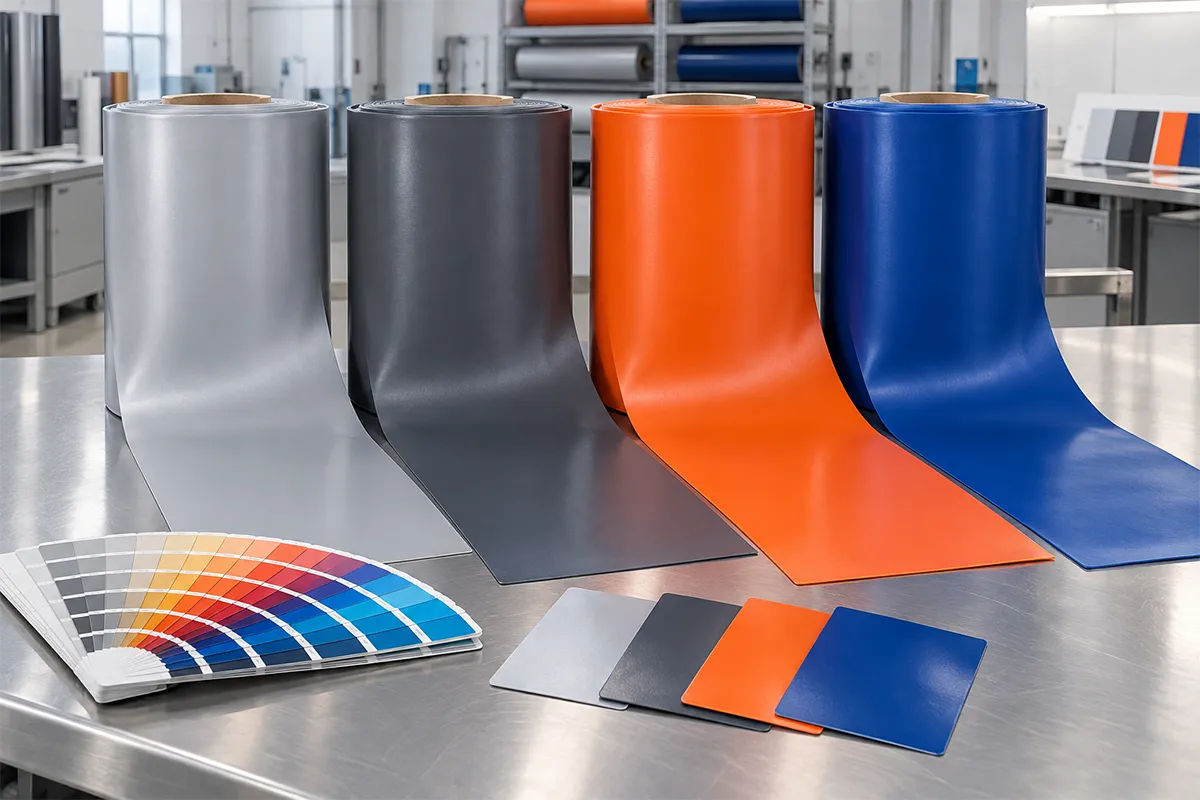
Custom Colors
Color can be developed from Pantone references or physical samples.
Smooth / Matte
Surface finish can be selected according to appearance and downstream handling.
Embossed Surface
Embossing can change appearance, hand feel and surface contact behavior.
PVC Film Can Be Used in Different Car-Cover Constructions
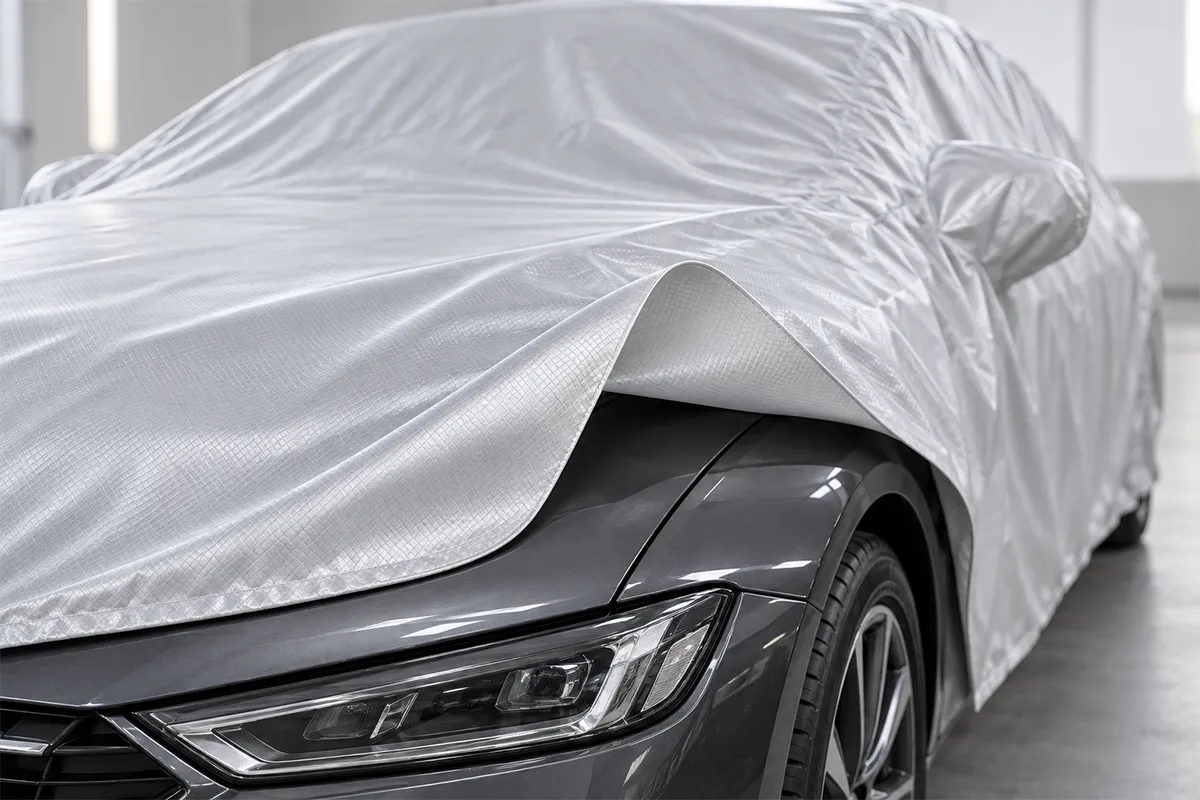
Single-Layer PVC Cover
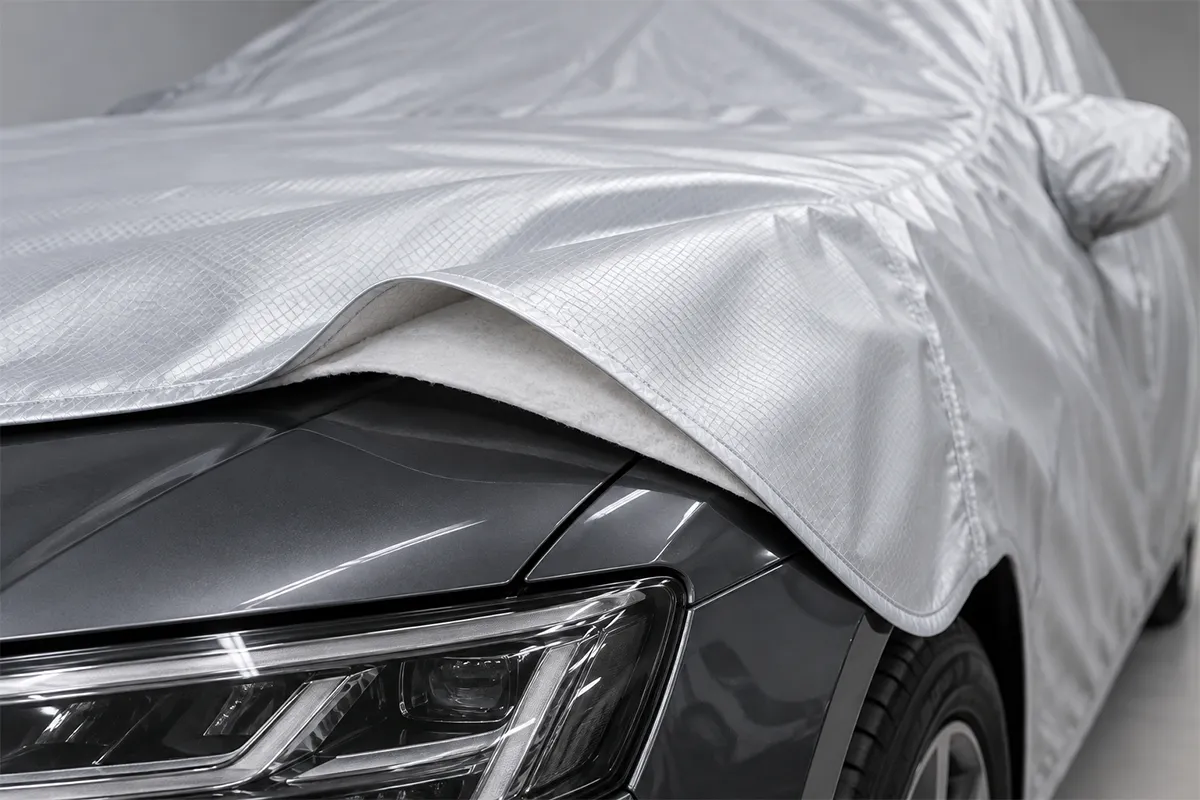
PVC + Soft Inner Layer
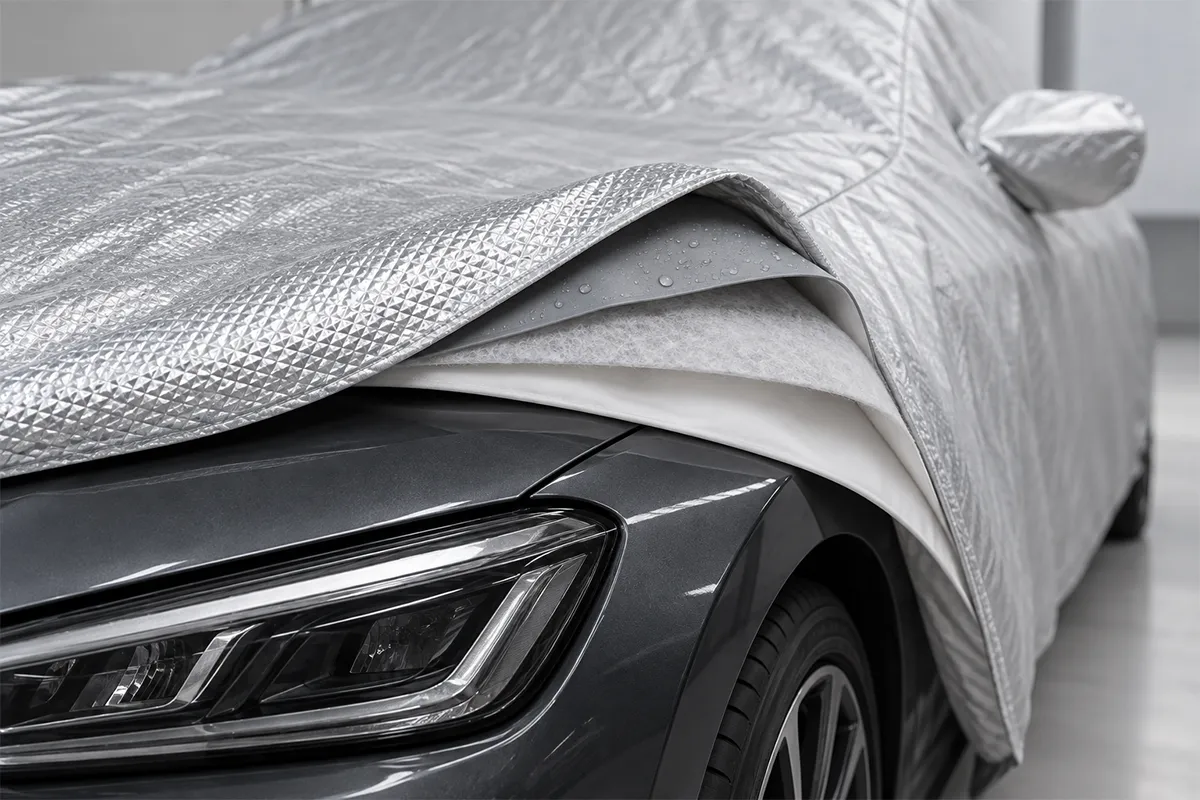
Multi-Layer Cover
Waterproof Film Alone Does Not Eliminate Scratch Risk
A car cover can move against the vehicle in wind. If dust, sand or other particles are trapped between the cover and the paint, that movement can produce abrasion.
This means car-cover performance depends on both the PVC film and the finished-cover design.
- Keep vehicle and inner cover surface clean.
- Control film surface and stiffness.
- Use secure hems or straps to reduce wind movement.
- Consider a soft inner layer for paint-sensitive designs.
- Validate the complete finished cover, not only the PVC roll.

Reliable Car-Cover Production Starts With a Stable PVC Roll
Roll condition affects cutting efficiency, handling, welding consistency and finished-cover appearance.
Thickness Consistency
Stable gauge supports consistent softness, welding behavior and product weight.
Flat Film
Reduces wrinkles and handling problems on large cutting tables.
Stable Winding
Helps prevent loose rolls, telescoping and uneven unwinding.
Clean Roll Edges
Core dimensions and winding direction can be matched to the customer’s unwinding system.
Test What Can Actually Cause a Car Cover to Fail
Thickness and color are important, but car-cover materials should also be evaluated for what happens after repeated folding, sun exposure and hot contact.
01. Thickness Profile
Check film gauge across the web and through the roll.
02. Tensile & Elongation
Evaluate MD / CD mechanical behavior where required.
03. Surface & Color
Compare production against the approved reference sample.
04. Hot-Contact Screening
Evaluate tack, oil transfer and contact staining where applicable.
05. Welding Trial
Confirm seam compatibility on customer converting equipment.
06. Roll Inspection
Check edges, winding, dimensions and visible defects before shipment.
What Should Be Tested Before Mass Production?
The final test plan should be agreed according to cover design and intended parking environment.
Film Specification
- Thickness
- Color
- Width
- Surface
- Roll weight / length
Mechanical Performance
- Tensile strength
- Elongation
- Tear behavior
- Flexibility
- Repeated folding
Environmental Performance
- UV aging
- Heat dimensional stability
- Hot-contact staining
- Surface tack after aging
- Finished-cover water test
Recommended Approval Method
Produce a trial quantity, convert the film into the actual car-cover design, test the finished cover under the intended heat / sun / parking environment, then retain an approved film and finished-cover reference for repeat production.
How to Specify PVC Film for Your Car Cover
A useful RFQ should describe the finished product and its operating environment, not only film thickness.
Define the Cover Type
Car, SUV, pickup, motorcycle or another vehicle protective cover.
Define the Environment
Indoor, garage, carport, semi-outdoor or higher outdoor exposure.
Confirm Thickness
Provide current film gauge or target finished-cover weight and durability.
Define the Joining Process
Heat welding, RF welding, sewing or another converting method.
Define Surface Contact
Direct PVC-to-paint contact or multi-layer construction with a soft liner.
Define Weathering Target
UV exposure, heat conditions, expected use period and required tests.
Already Producing Car Covers? Send Us Your Current PVC Film
If your car-cover production line is already running, the current material gives us a much better starting point than selecting a generic PVC grade.
Send the current TDS, a physical sample or a finished car-cover sample together with the problem you want to solve.
- Current PVC film sample
- Current thickness and width
- Current PHR if known
- Joining / welding method
- Current outdoor usage
- Current failure or customer complaint
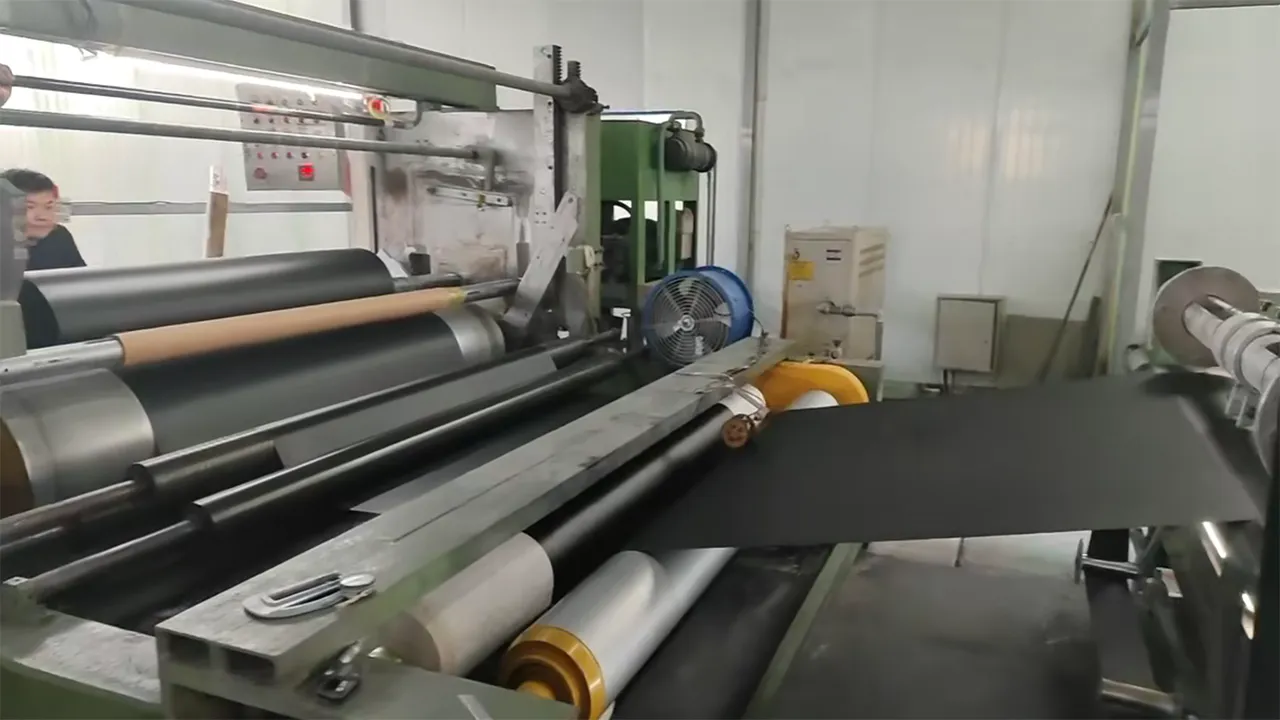
Flexible PVC Film Developed Around Your Finished Product
YESIN focuses on flexible calendered PVC film and works from the customer’s application and converting process toward an agreed production specification.
Calendered PVC Focus
Focused on flexible PVC film rolls for industrial converting rather than finished car covers.
Custom Formulation
Thickness, softness, plasticizer system, color, UV stabilization and applicable functions can be developed.
Custom Roll Supply
Width, length, weight, core, joining and roll configuration can be matched to downstream production.
Sample-to-Production Control
Approve physical samples and technical parameters before repeat bulk production.
What Information Helps Us Develop the Right Car Cover Film?
The more clearly the usage environment and converting process are defined, the easier it is to avoid unnecessary sample rounds.
Cover Application
Car / SUV / Pickup / Motorcycle
Current or target μm / mm
Film Thickness
Film Width
Required finished roll width
Roll Specification
Length / weight / core / diameter
Color / Finish
Silver / Grey / Custom / Embossed
Softness / PHR
Current specification if known
Joining Method
Heat weld / RF weld / Sew
Usage Environment
Indoor / Semi-Outdoor / Outdoor
UV Requirement
Standard / Stabilized / Test target
Paint Contact
Direct contact / Inner liner
Current Problem
Staining / Brittleness / Tear / Welding
Reference Material
TDS / Film sample / Finished cover
PVC Car Cover Film FAQ
Technical questions for car-cover manufacturers selecting flexible PVC film rolls.
Is this a finished PVC car cover?
No. YESIN supplies flexible calendered PVC film in jumbo rolls for downstream car-cover manufacturers. Cutting, printing, welding or sewing, assembly and packing are completed during the customer’s converting process.
What PVC film thickness is commonly used for car covers?
Commercial lightweight PVC car covers can use approximately 100 μm / 0.10 mm film, making it a practical reference starting point. The correct thickness should still be selected according to durability, weight, softness, cover design and intended use environment.
Can the film be supplied in metallic silver or grey?
Color and appearance can be developed according to an approved physical sample or color target. Silver-grey and opaque car-cover designs are common. Any numerical solar-reflectance or heat-reduction claim should be separately verified by testing.
Can YESIN develop UV-resistant PVC car-cover film?
UV-stabilized formulations can be developed according to the intended exposure conditions. The required weathering test and acceptance criteria should be agreed before production if outdoor durability is a critical requirement.
Why is plasticizer migration important for car covers?
Flexible PVC contains plasticizers that provide softness. Heat and environmental aging can influence their migration. Because a car cover may remain in contact with painted vehicle surfaces, migration, surface tack and contact staining should be evaluated for paint-contact applications.
Can YESIN guarantee that PVC film will never stain car paint?
Mechanical-property targets can be discussed according to the customer’s current specification, car-cover application and test method. MD and CD requirements should be stated separately where important.
Can the film be welded instead of sewn?
Flexible PVC is commonly converted using thermal or high-frequency welding processes, but welding conditions depend on formulation, thickness and equipment. YESIN recommends approving the film through an actual converter welding trial.
Is PVC film completely waterproof?
Flame-retardant formulations can be discussed according to the customer’s finished-cover requirement and specified test method. Final finished-cover compliance depends on the complete car-cover construction and should be verified on the finished product.
Can PVC film be used with a soft inner layer?
Yes. A converter can use the PVC film as the outer waterproof layer and combine it with spunbond, polyester or another soft inner material where additional paint-surface protection is required. Compatibility should be tested on the complete construction.
What information is required for a quotation?
Please provide film thickness, width, roll length or weight, color, surface, softness or PHR if known, joining process, cover application, indoor or outdoor usage, UV requirement, quantity and destination. A current film sample or TDS is especially useful for replacement projects.
Send Us Your Current PVC Film or Finished Car Cover
Tell YESIN your thickness, width, softness, color, joining method and actual parking environment. If you already manufacture car covers, send the current TDS or a physical film sample so the trial formulation can start from a real production reference.
Request Sample & Quote